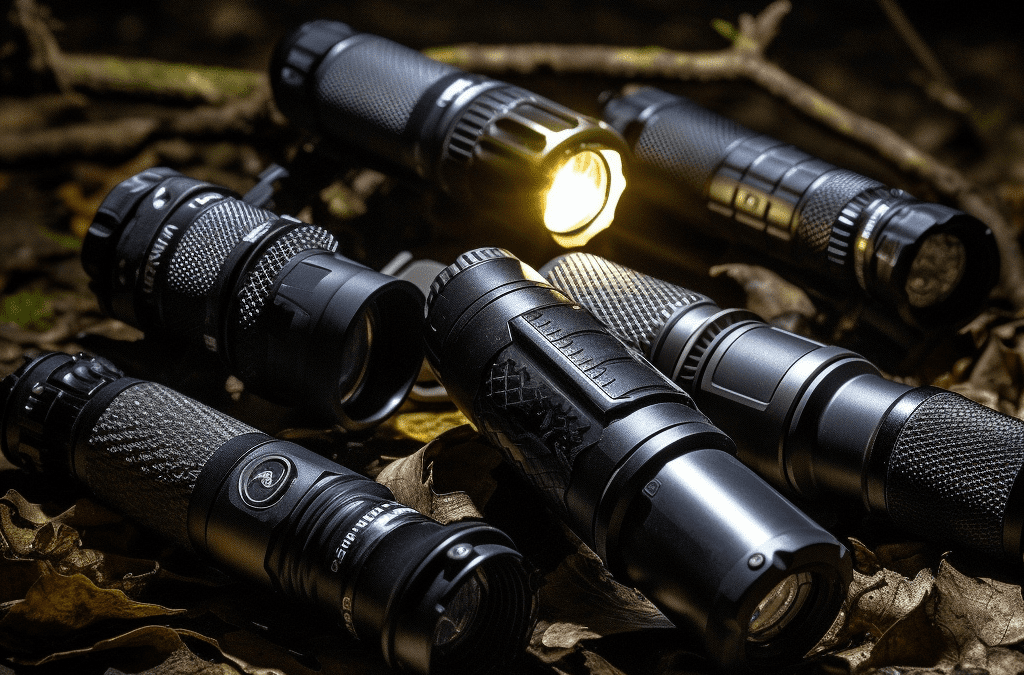
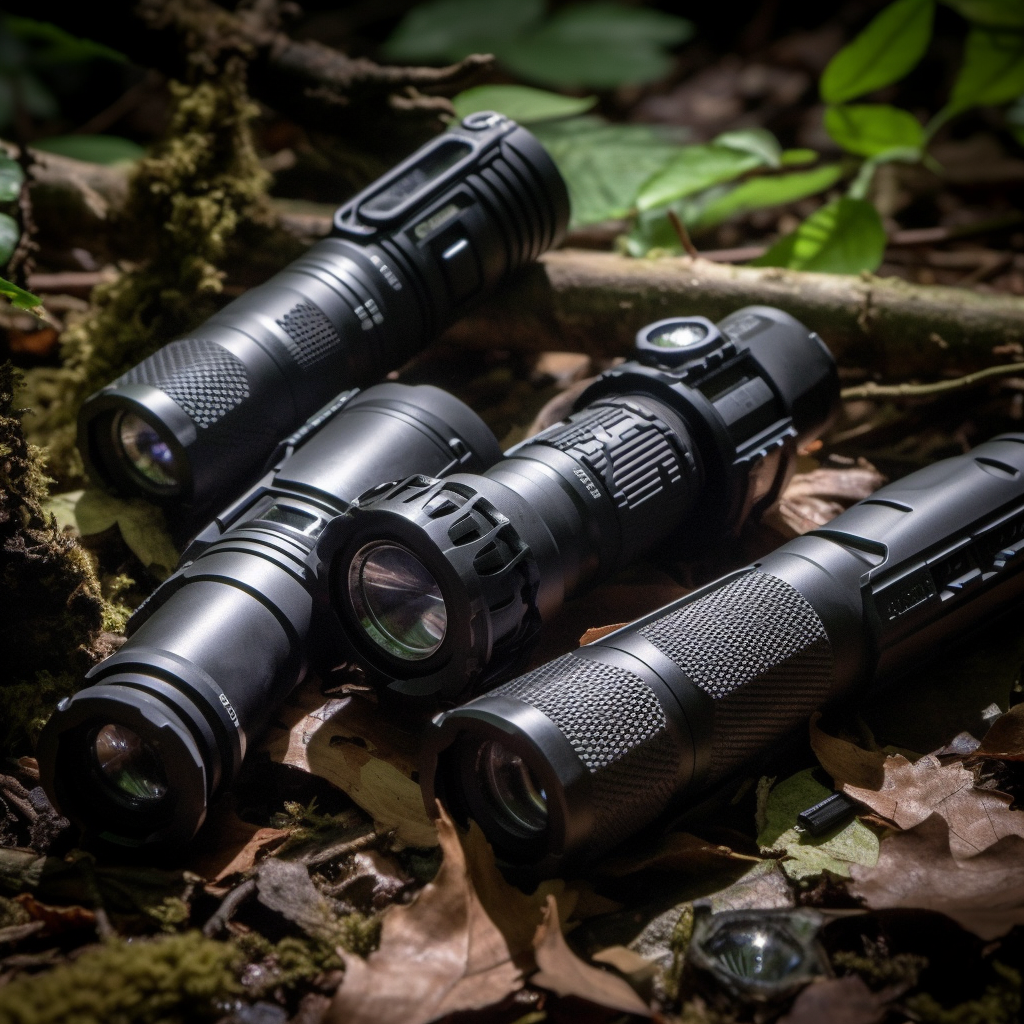
The best survival flashlights are more than just a source of light, they are your lifeline in challenging situations.
They’re essential in situations like being deep in the wilderness or faced with a sudden power outage, and then darkness starts to close in. It’s a situation that becomes even more terrifying when you realize you don’t have a flashlight to guide you.
In such moments, high-quality survival flashlights can make all the difference between safety and disaster.
Don’t leave yourself vulnerable to the unexpected. Equip yourself with the right survival flashlights for every scenario.
Whether you’re assembling a bug-out bag or upgrading your everyday carry, we’ve compiled a list of the top 25 survival flashlights for 2023 that cater to EDC and tactical use.
Don’t wait until it’s too late — secure your safety now and face the unknown confidently.
Understanding why you need a survival flashlight is the first step in making an informed purchase that goes beyond the basic need for illumination, it’s about ensuring your personal safety.
Illumination
Your flashlight can not only light your path when darkness arises, but it can serve as a self-defense tool when needed. Look for models that have a strobe light feature for disorienting potential threats.
Flashlights are helpful when camping, hiking, or backpacking, and when it suddenly gets dark. They can help you see where you’re going, avoid any hazards, and even signal for help if needed.
Self-defense
High-lumen survival flashlights or models with a strobe function can temporarily blind or disorient potential attackers, giving you precious time to escape or defend yourself. Plus, some have a tactical bezel for striking an attacker if necessary.
Signaling and Communication
Signaling and communication are vital in rescue scenarios and your flashlight could become your savior. Features like SOS modes can be lifesaving in emergency situations. Ever heard of Morse code? With a flashlight, you can communicate and send messages or even signal for help when you’re lost.
For example, you can use the SOS signal (three short flashes, followed by three long flashes, and then three short flashes) to alert rescuers to your location.
Fire-Starting
Fire-starting capabilities can transform your flashlight from a light source to a survival tool. Look for units with a built-in fire starter for ultimate utility.
If you’re ever in a situation where you need to start a fire, some survival flashlights come with built-in fire starters. Talk about handy for keeping warm, cooking, or signaling.
Emergency Tool
An emergency tool feature can make your flashlight a multifunctional lifesaver. This can include a glass breaker, seatbelt cutter, or even a compass, making them incredibly useful in emergencies like car accidents or natural disasters.
Durability and Reliability
Durability and reliability go hand-in-hand when considering your flashlight purchase, be sure your choice is both water-resistant and shockproof.
Some of the best survival flashlights are designed to withstand harsh conditions, made from durable materials like aircraft-grade aluminum and featuring water-resistant or waterproof capabilities.
They’re designed to work when you need them most.
Versatility
A versatile flashlight allows your flashlight to serve multiple functions beyond just illumination. Consider models that offer different light modes and additional features like a laser pointer. With multiple modes like high, low, and strobe, you can adapt to different situations, save battery life, or signal for help.
Buyers Guide: What To Consider Before Buying Survival Flashlights
Our survival flashlight buyer’s guide is designed to walk you through the key considerations for your purchase. This ranges from size and weight to additional features like USB charging. When searching for the perfect EDC survival flashlights, keep these key factors in mind:
Size and Weight
Size and weight are crucial factors for portability. Smaller flashlights are easier to carry but may compromise on features. Look for a compact and lightweight flashlight that easily fits in your pocket, purse, or bag without being too bulky or heavy.
Durability
Durability should be at the top of your list when selecting survival flashlights. Opt for a flashlight made from sturdy materials like aircraft-grade aluminum or stainless steel, and ensure it has a water-resistant and shockproof design to withstand harsh conditions.
Brightness and Adjustability
The number of lumens (brightness) and adjustability are key features that contribute to a flashlight’s effectiveness. Check for options that allow you to switch between high, medium, and low settings. Consider the flashlight’s lumens and select one with adjustable brightness levels, so you can adapt the light to different situations and conserve battery life when needed.
Battery Life and Type
Battery life and type can significantly affect how long your flashlight remains useful. Options like solar charging can provide an extra layer of reliability. Check the flashlight’s battery type and life, such as rechargeable or disposable batteries.
Longer battery life is ideal for emergency situations, and rechargeable batteries can be more cost-effective in the long run.
Additional Features
Additional features can turn a basic flashlight into a multi-purpose tool. Keep an eye out for built-in radios, solar panels, or even emergency sirens. Look for extra features like a strobe or SOS mode for emergencies, a zoomable focus for adjusting the beam distance, and a built-in clip for easy attachment to your belt or bag.
Now that you know what to look for, lets check out some of the best survival flashlights.
25 Best Survival Flashlights For 2023 EDC & TacticalUse
If you’re planning to be prepared, you’ll want to invest in survival flashlights that rank among the top 25 in both EDC and tactical use. Here are the best ones available on the market:
This Streamlight flashlight offers custom-engineered optics for a focused beam and optimized peripheral illumination, with a multi-function switch for various modes.
Its durable aluminum construction and comfortable grip make it perfect for users who need a powerful 1,100-lumen light that reaches up to 510 meters.
Keep up in the dark with a flashlight that offers a solid build, blinding brightness, and compact size.
The GearLight High-powered LED Flashlight features an ultra-wide beam, long battery life, adjustable zoom, multiple lighting modes along with water-resistant durability.
The LED pocket pen is the perfect pocket flashlight for indoor and outdoor activities. Easily slip it into your pocket or bag, and you won’t even notice it’s there.
This multi-functional flashlight also acts as a power bank, providing emergency power for your smartphone. It’s perfect for home, outdoor activities, and emergencies.
Need a reliable light source for any situation? The Vont LED Tactical Flashlight boasts a non-slip grip, smart dual-mode illumination and lightweight indestructible construction.
A flashlight from one of the world’s leading battery brands. The Energizer LED Spotlight is a durable, 600-lumen work light with a 425-meter beam, perfect for professionals and outdoor enthusiasts.
Plus, it’s impact-resistant, water-resistant and includes a hands-free option.
Illuminate your surroundings effortlessly with the GearLight S2000. Its rugged construction ensures it can handle any situation, making it a reliable companion wherever you go.
Ideal for outdoor adventures and emergencies, it’s both durable and portable.
The GearLight TAC LED flashlight is a compact yet powerful light source, small enough for everyday carry and durable enough to withstand tough conditions.
This versatile flashlight set includes two TAC flashlights and essential accessories. Plus, it features two zoom modes. It’s perfect for camping, emergencies, and daily use.
The Simpeak Hand Crank and Solar Flashlight offer versatile emergency lighting with its minute-long cranking for 10 minutes of light and solar panel for backup power.
Its rugged design and built-in carabiner make it perfect for outdoor activities and on-the-go emergencies.
Experience top-notch quality and durability with this weather-resistant flashlight. It features an anodized design and a powerful projecting beam perfect for camping, climbing, fishing, and hunting.
Designed for professionals and consumers, MagLite LED flashlights showcase exceptional craftsmanship, engineering, and advanced technology.
The BolDuck 180,000 Lumens Super Bright Flashlight comes equipped with an upgraded LED chip and features a zoomable design with six lighting modes, including spotlight and floodlight options.
This rechargeable flashlight is IPX7 waterproof and perfect for various activities such as camping, hiking, and emergencies while also serving as a power bank for your devices.
A compact and tactical flashlight with micro USB charging, the Fenix UC35 is capable of producing up to 1000 lumens and reaching 872 feet.
Its durable aluminum body and multiple output modes, including strobe, make it an excellent choice for military, policing, outdoor lighting, and emergencies.
This high-lumen tactical flashlight boasts 4000 lumens, four brightness levels, and a glass-breaking bezel for emergencies.
With USB-C fast charging, strobe-ready functionality, and waterproof rating, this flashlight is perfect for high-intensity tactical operations and comes with a compatible NTH20 tactical holster.
This Fenix flashlight is super bright at 3000 lumens and reaches up to 442 yards, perfect for pros and outdoor enthusiasts. With USB-C fast charging and a compact design, you can easily switch between four brightness modes and strobe.
It’s the ideal buddy for camping, hiking, and more.
This awesome flashlight features three lighting modes, offering up to 800 lumens and a 310-meter beam for max brightness.
It’s got a dual-switch tech, a rechargeable battery, and a sleek aircraft aluminum body. It’ll last you long and it’s versatile to use for all your adventures!
This helmet flashlight offers 115 lumens, a bright blue tail light LED, and an easy-to-use on/ off switch.
It conveniently rotates 360 degrees, clamps securely to your helmet, and is perfect for those who need reliable hands-free lighting in high-pressure situations.
The ultra-compact Aviator flashlight features a bright primary white and secondary colored LED in one sealed head, with a self-locking selector ring for easy switching between the two.
It comes in a durable, aerospace aluminum construction, so it’ll last long. It also features a dual-output tail cap click switch, making it a versatile and reliable choice for various lighting needs.
FAQs About Survival Flashlights
What kind of survival flashlights are the best?
Choosing the best survival flashlights really depends on your needs, but you can’t go wrong with one that’s durable, versatile, and bright with multiple modes.
How bright should survival flashlights be?
Survival flashlights should ideally be at least 200 lumens bright. This is because, in a survival situation, you’ll need enough light to navigate dark environments, avoid potential hazards, and even signal for help if necessary.
A brighter flashlight can also serve as a self-defense tool, temporarily disorienting potential threats.
What kind of flashlight is the most sustainable?
The most sustainable flashlights are those with rechargeable batteries, like the ones using solar power or USB charging.
These types of flashlights help reduce waste by eliminating the need for disposable batteries, making them a more environmentally friendly and cost-effective option in the long run.
Key Takeaways of the Best Survival Flashlights
As you face the uncertainties of the world around you, having reliable survival flashlights in your arsenal is crucial.
Imagine being stranded during a power outage or natural disaster, with only the light of your trusty survival flashlight guiding you to safety.
Or picture yourself in a car accident, using the built-in emergency tools to escape and save lives. These are the moments when a high-quality, versatile flashlight becomes invaluable.
Don’t wait until it’s too late to invest in a flashlight that offers durability, reliability, and versatility for your survival needs. Arm yourself with the confidence and security that comes with being prepared for any situation that comes your way.
Remember, the light you choose today could be the beacon of hope that illuminates the path to safety tomorrow.
Prepping 101: Mastering Essential Survival Skills for Modern Challenges
Equip yourself with vital knowledge in emergency management, resource allocation, and sustainable living to confidently face unexpected events.
Our comprehensive guide delves into the core aspects of prepping, including strategic planning, stockpiling essentials, and developing self-sufficiency to safeguard your and your loved ones’ future.
Explore key areas such as emergency kits, food preservation, water purification, and energy independence. Learn to navigate natural disasters, financial crises, and global uncertainties with our expert tips.
Prepping 101 isn’t just about survival; it’s about thriving in any circumstance with foresight and preparedness.
Key Takeaways
Prepping is a practical approach to ensuring your safety in emergencies. It involves taking steps to be financially prepared and stocking up on essential supplies.
Building a bug out bag and developing survival skills are crucial for unexpected situations.
It’s important to note that prepping is not just for extremists or conspiracy theorists. It’s a sensible way to be prepared for any situation.
Don’t wait for disaster to strike. Start prepping today to secure a safe future for yourself and your loved ones.
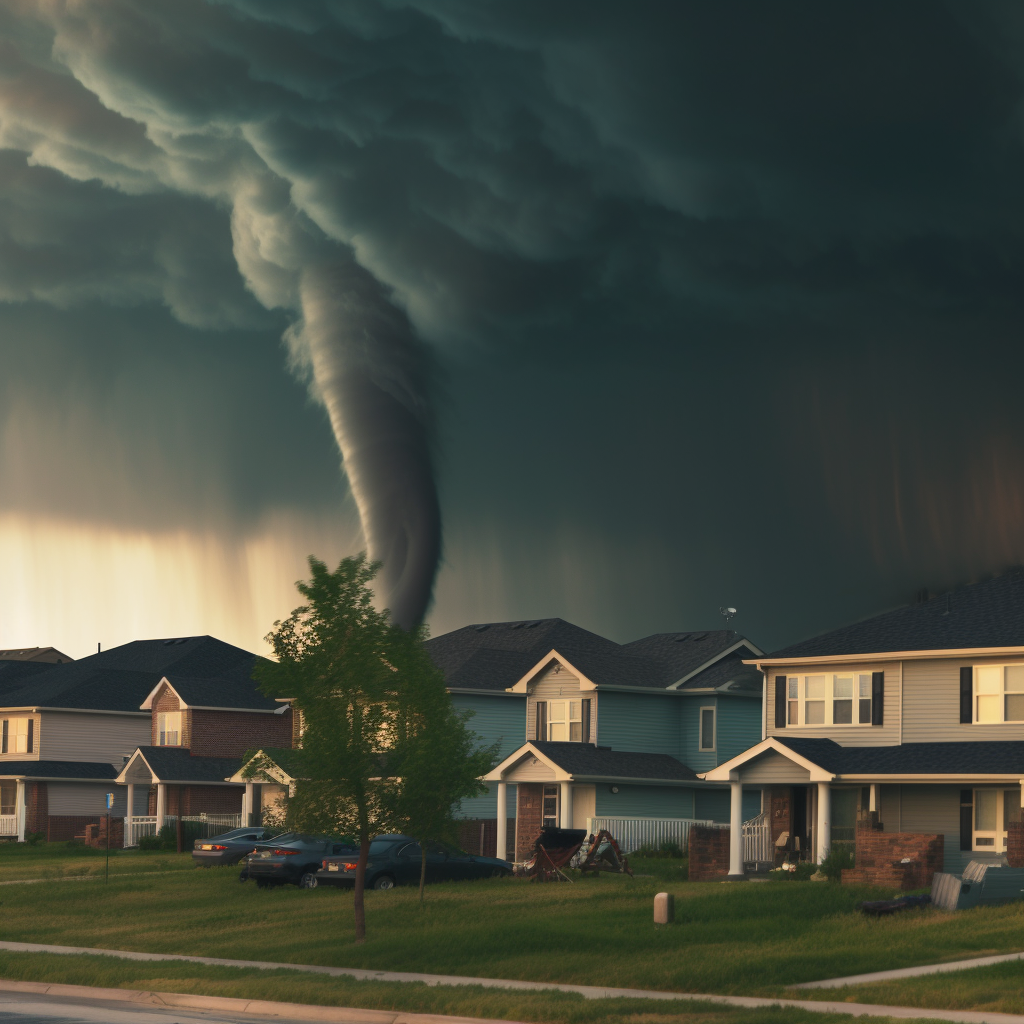
Photo of a tornado in the background of a neighborhood.
There are numerous reasons why you should start prepping without delay. In today’s world, where the frequency of natural disasters is increasing, the ongoing pandemic is a constant concern, and unexpected emergencies can occur at any time, it’s crucial to be prepared.
Prepping isn’t limited to beginners; it’s a practice that benefits anyone who prioritizes their safety and aims to acquire essential survival skills. Watching preppers TV series provides you with valuable knowledge and insights on how to effectively prepare for various scenarios.
By stockpiling necessary supplies and developing self-reliance and problem-solving skills, prepping equips you with the tools needed to navigate through unpredictable situations.
Don’t wait for disaster to strike; take action today and ensure your readiness for whatever challenges may come your way.
Start your prepping journey now and gain the peace of mind that comes with being prepared for the unknown.
Financial Preparedness Tips
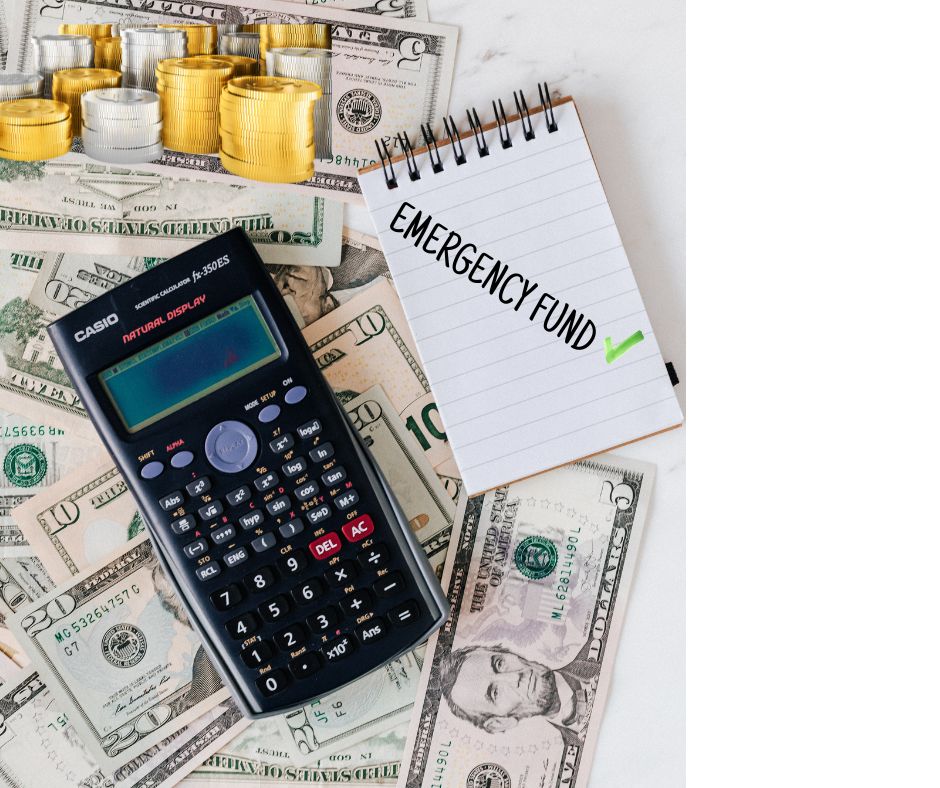
Financial preparedness is crucial for your financial well-being and security. One key aspect of being financially prepared is to save an emergency starter fund of at least $1,000. This fund acts as a safety net to protect you from unexpected expenses or income loss.
It’s recommended to aim for long-term financial security by saving three to six months’ worth of expenses. Creating a budget is essential in disaster preparedness as it helps you keep track of your spending and prioritize saving.
Following the advice of financial expert Dave Ramsey, who suggests the ‘baby steps’ approach to building an emergency fund, can be beneficial. By adopting sound financial habits, such as budgeting and consistently saving, you can achieve financial preparedness and gain peace of mind.
Building a strong financial safety net for emergencies is an important step towards ensuring your financial stability.
Adopting Sound Financial Habits
Adopt sound financial habits in your prepping journey to ensure stability and resilience.
By incorporating these habits, such as budgeting, bulk buying, and cost consideration, you can effectively prepare for emergencies while managing your everyday expenses.
Create a detailed budget that includes your income, expenses, and savings goals. Track your spending and make adjustments as needed to stay on track with your financial objectives.
Take advantage of sales and discounts by buying essential prepping items in bulk. This not only saves you money in the long run but also ensures you have an ample supply of necessary items.
When prepping, consider the cost of the items you purchase. Look for affordable options that meet your needs and prioritize essential items over non-essential ones.
By adopting these sound financial habits, you can navigate your prepping journey with responsibility and effectiveness.
Start today and take control of your financial future, ensuring you’re well-prepared for any situation that may arise.
Photo of our food pantry stocked with #10 cans.
Essential Supplies for Prepping
To be well-prepared for emergencies, it’s essential to have a stockpile of necessary supplies. Investing in essential prepping supplies will ensure your safety and survival in times of crisis.
Here are three main categories of supplies that you should prioritize:
1. Food, Water And Shelter:
Food water and shelter are at the top of the list because they are a must to survive.
To be well-prepared for emergencies, stocking up on non-perishable food items and having a proper shelter is crucial. Fill your survival kit with long-lasting supplies such as canned goods, dried fruits, rice, grains, dehydrated foods, and protein bars.
Don’t forget to ensure a reliable and ample water supply as well. Consider investing in water purification tablets or a filtration system to guarantee access to clean and safe water.
Shelter is paramount in any survival situation, as it serves as a fundamental element of the survival hierarchy, right alongside the essentials of food and water.
A well-constructed shelter provides protection from the elements, be it extreme temperatures, precipitation, or wind.
Shelter also plays a crucial role in preserving your mental and emotional well-being, providing a safe haven, sense of security and stability in an otherwise chaotic environment.
Moreover, a properly designed shelter can help you maintain a low profile and avoid detection in case you need to evade potential threats.
Whether it’s a temporary tarp lean-to, a makeshift debris hut, or a well-stocked bug-out location, understanding the principles of shelter-building and having the necessary tools and materials can be a lifesaving skill in times of crisis.
2. Medical and Hygiene Supplies:
Access to medical services can be limited during emergencies, making it vital to have a comprehensive first aid kit on hand. Include essentials like adhesive bandages, sterile gauze, antiseptic wipes, and common medications.
Pay attention to hygiene as well, stocking up on items like soap, toothpaste, and toilet paper. Maintaining cleanliness is crucial for preventing the spread of diseases.
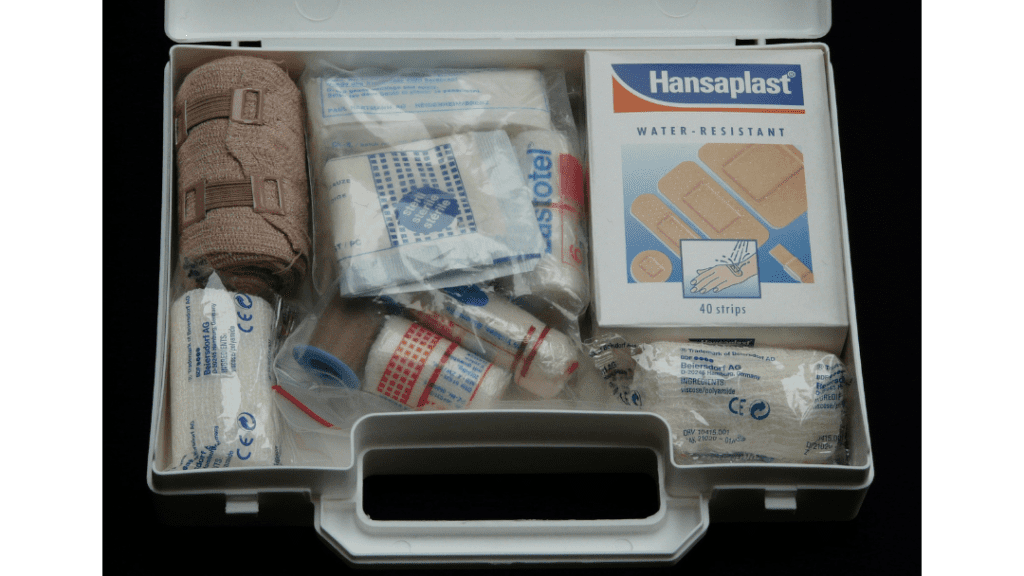
Photo of a first aid kit supplies. Bandages, gauze and band aids.
3. Tools and Equipment:
Equipping yourself with essential tools and equipment is fundamental in emergency situations. A reliable flashlight is a must-have for illumination, especially in the dark. Waterproof matches will come in handy for fire-starting purposes, and extra batteries will ensure your devices remain powered.
A multi-tool is a versatile accessory that serves multiple functions. Additionally, having a portable radio or communication device will keep you connected and informed when critical information is necessary.
By focusing on these three main categories of supplies, you will significantly enhance your preparedness and increase your chances of successfully navigating through any crisis.
Remember to regularly check and replenish your supplies, ensuring that they are always up-to-date and readily available when needed.
Importance of a Bug Out Bag
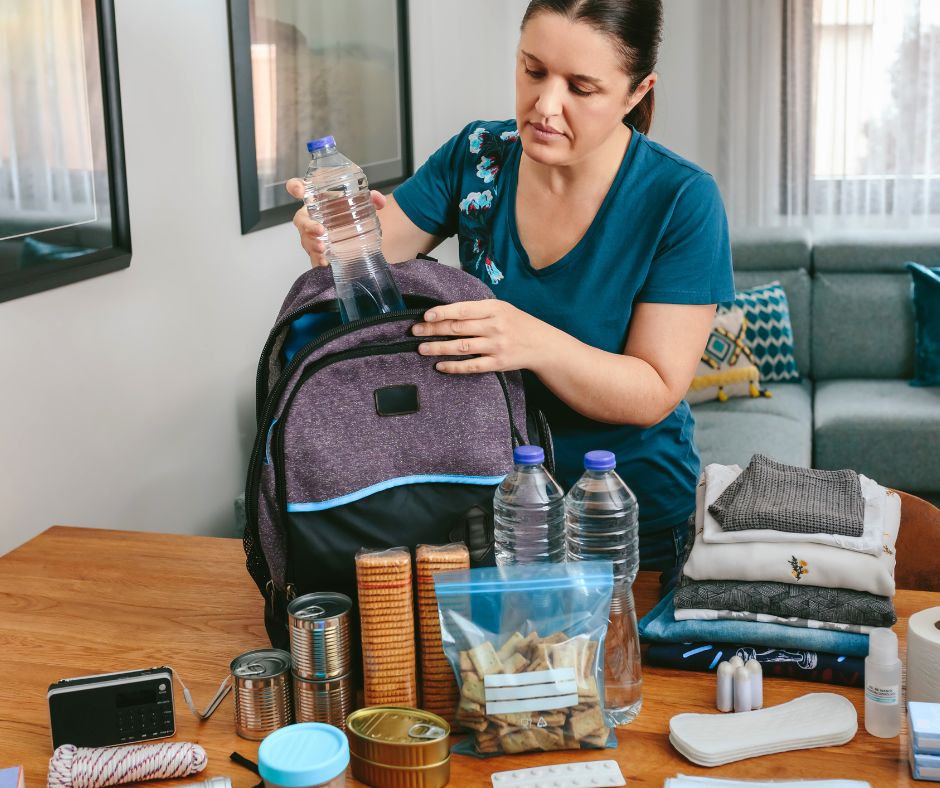
A bug out bag is an essential item for quick and efficient evacuation during emergencies. It ensures self-sufficiency and survival for at least 72 hours, providing you with the necessary supplies for food, water, shelter, and first aid.
A bug out bag allows for mobility and adaptability in unpredictable situations, making it a crucial component of your emergency preparedness.
By having a bug out bag ready, you can confidently face any emergency and have the necessary resources to overcome challenges. It provides you with the means to survive during a crisis, giving you peace of mind knowing that you’re well-prepared.
Having a bug out bag ensures that you’re ready to leave your home at a moment’s notice, enabling quick evacuation when needed. It’s a portable bag filled with essential supplies that are carefully selected to sustain you during an emergency situation.
Whether it’s a natural disaster, power outage, or any other unforeseen event, having a bug out bag ensures that you have the tools and resources to navigate through the crisis.
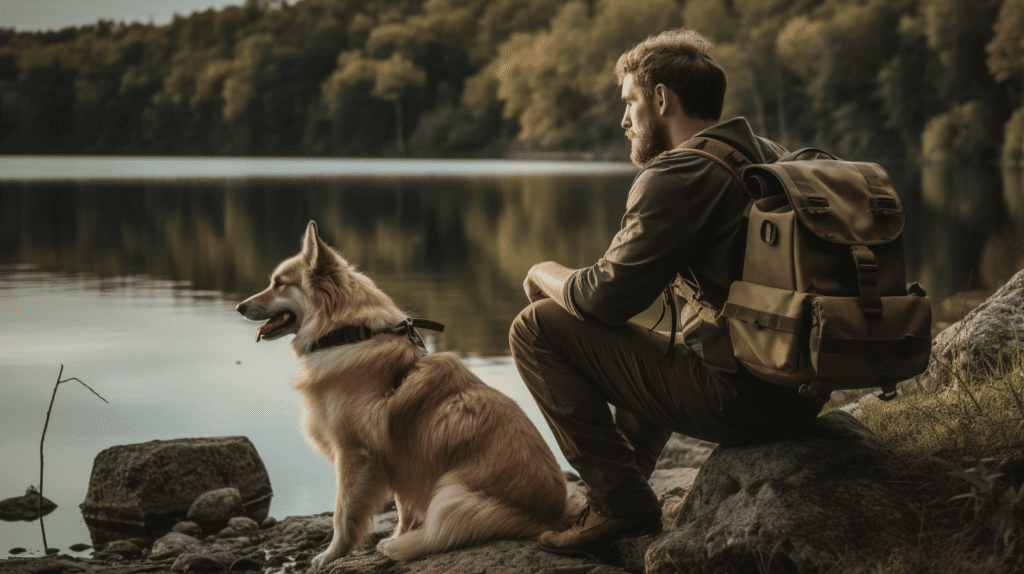
Man wearing a backpack sitting on a rock with his dog looking out at a lake.
Must-Have Survival Skills
Mastering survival skills is imperative for effectively navigating through emergencies and guaranteeing your safety and well-being. As a skilled prepper, it is vital to possess a diverse range of abilities to handle any unforeseen circumstance that may arise.
To this end, there are three essential survival skills that you must cultivate:
Disaster Preparedness: Developing the ability to assess potential dangers and create comprehensive emergency plans is indispensable.
Acquiring knowledge in first aid and CPR will enable you to provide immediate medical assistance when required. In addition, understanding how to identify and procure safe food and water sources during a crisis is critical for survival.
To find a CPR class near you, go to the American Red Cross for training services.
Self-Defense: Becoming proficient in self-defense techniques will allow you to safeguard yourself and your loved ones in times of peril. It is essential to familiarize yourself with different types of self-defense weapons and learn their effective utilization.
Cultivating situational awareness will enable you to anticipate and evade potential threats proactively.
Communication: Acquiring proficiency in using various communication devices, such as ham radios and walkie-talkies, is crucial for staying connected during emergencies.
Developing effective communication strategies will enable you to transmit vital information to others efficiently. Enhancing your ability to actively listen and convey messages clearly and succinctly is also paramount.
By honing these fundamental survival skills, you will be well-prepared to navigate any emergency situation that comes your way.
Whether it involves assessing dangers, defending yourself, or communicating effectively, these skills will empower you to remain safe and take control during challenging times.
Building a Support Network
Building a support network and collaborating with individuals that have different skillsets and expertise will ensure a well-rounded group. When disaster strikes, joining forces with others allows you to combine resources, skills, and knowledge to effectively navigate through unpredictable situations.
By working together, you can increase your chances of survival and thrive in the face of adversity. Seek out people who have knowledge in areas such as first aid, navigation, food preservation, and self-defense.
One of the key benefits of collaboration during emergencies is the shared pool of resources. When you collaborate with others, you can combine your prepping supplies, ensuring that everyone has access to essential items like food, water, and medical supplies.
This shared resource pool not only increases your chances of survival but also minimizes the strain on any one individual or group.
Another advantage of collaboration is the diverse range of skills that each person brings to the table.
During emergencies, tapping into a diverse set of skills such as first aid, navigation, communication, and problem-solving can be invaluable.
By collaborating with others, you can leverage this collective knowledge and expertise to tackle challenges more effectively.
Furthermore, collaboration provides essential emotional support during difficult times. Emergencies can be overwhelming, and having a support network is crucial for your mental and emotional well-being. Be sure to establish reliable communication channels, such as a group chat or designated meeting spot, this will facilitate effective coordination and information sharing.
It is important to foster a sense of trust and cooperation within the group, so that everyone feels comfortable asking for and offering help when needed.
Remember, building a support network is not just about preparing for emergencies, but also about forming meaningful connections with others who share a common goal of readiness and resilience.
Bugging Out Vs. Sheltering in Place
When faced with an emergency situation, it’s crucial to carefully consider whether to bug out or shelter in place. Your circumstances and level of preparedness play a significant role in this decision-making process.
Factors to consider when contemplating a bug out scenario include mobility, the availability of survival gear, and having a designated safe location to retreat to.
It’s important to assess your ability to quickly and efficiently move to a safer area if necessary.
On the other hand, sheltering in place can be a viable option if you have a well-stocked and secure location.
Prioritize your comfort by ensuring you have ample survival supplies, including non-perishable food, water, and medical necessities. Take steps to secure your home, such as reinforcing doors and windows, and consider acquiring basic self-defense skills to protect yourself and your loved ones.
Ultimately, your decision should be based on your available resources, capabilities, and the potential risks you may face during an emergency.
It’s essential to make a realistic assessment of your situation, taking into account factors such as the severity of the crisis, the duration of the event, and the availability of support systems.
Remember, there is no one-size-fits-all answer to this question. It’s important to evaluate your circumstances and preparedness level carefully.
By doing so, you can make an informed decision that maximizes your chances of survival and minimizes risks during a crisis.
Prepping in Small Spaces
Prepping in small spaces? No problem! With the right strategies, you can effectively prepare for emergencies even in compact living spaces like apartments or dorm rooms.
Take advantage of under-the-bed storage, deep cabinets, bookshelves, and bins in the garage to maximize your space. To save even more space and extend the shelf life of your supplies, consider vacuum packing items like clothing and bedding.
And don’t forget the versatility of tin foil, which can be used to wrap and protect delicate items.
When it comes to water storage, opt for gallon bottles or 5-gallon water containers as they are easy to store and manage.
Remember to prioritize your needs and get creative with your storage solutions in small spaces.
By utilizing the available space efficiently and thinking outside the box, you can effectively prep for emergencies, no matter the size of your living space.
H/T to @TheUrbanSentinelChannel for this video on small prepping spaces.
Food Storage Basics
To maximize your food storage efforts, consider these essential strategies:
Vacuum sealing: Extend the shelf life of your food by removing air through vacuum sealing. Use a vacuum sealer to keep dried fruits and nuts fresh.
Root cellaring: Store root vegetables like carrots, potatoes, and beets in a root cellar. This cool and stable environment helps extend their freshness.
Curing and smoking: Preserve and enhance the flavors of meats by curing and smoking them. Invest in a smoker to enjoy homemade bacon, jerky, and sausages.
Fermentation: Increase the shelf life of vegetables and enjoy tangy flavors through fermentation. Make sauerkraut or pickles to have a source of probiotics and nutrients.
Bulk storage: Save money by buying in bulk and store essentials like rice, pasta, and beans. Keep them fresh and pest-free in airtight containers.
Preserving herbs: Dry herbs such as basil, rosemary, and thyme to have flavors all year round. Hang them in a cool, dry place or use a dehydrator for long-lasting herbs.
Preserving dairy: Extend the shelf life of dairy products and have control over ingredients by making your own cheese or yogurt. Enjoy homemade dairy products with added freshness.
Canning: If you have a garden or access to affordable fruits and vegetables, canning is a great skill to learn. By canning your fresh food you are extending the shelf life and you can enjoy out of season fruits and veggies throughout the year.
Freeze Drying: If you own a freeze dryer, you know it is a great way to prep and store food. It prolongs your foods shelf life as well as making it light weight and easily tucked in a bug out bag. A great skill and option to have to get your emergency food storage prepared.
By incorporating these strategies into your food storage plan, you can ensure a diverse range of nutritious options, even in limited space.
Regularly rotate your supplies to maintain freshness and minimize waste for an effective food storage system.
Water Filtration and Storage Methods
To ensure a reliable supply of clean drinking water in emergency situations, it’s important to have effective water filtration and storage methods.
One option for water filtration is using water purification drops, which effectively treat large quantities of water. These drops are specially designed to eliminate harmful bacteria, protozoa, and viruses, making the water safe for consumption.
This system includes water treatment chemicals, a hand pump, and a water storage drum with a capacity of 55 gallons. With a shelf life of up to 4 years, it offers a long-term solution for water purification and storage.
When it comes to storing water, it is crucial to have suitable containers that are specifically designed for food storage. Gallon bottles or 5-gallon water containers made of food-grade plastic are ideal options.
They are easy to handle and convenient to store. It is recommended to label the containers with the date of storage so that you can easily track and rotate your water supply to maintain its freshness.
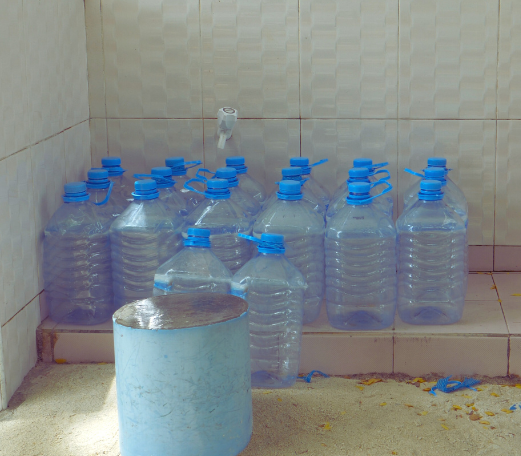
Water jugs for emergency storage.
For emergency situations, it is advisable to have at least one gallon of water per person per day for a minimum of three days.
However, for longer-term emergencies, it is recommended to have a two-week supply of water stored. This ensures that you have an adequate supply to meet your hydration and sanitation needs.
It is also important to consider the quality of the water you are storing. If you are collecting water from natural sources such as rivers or lakes, it is necessary to filter and disinfect it before storage.
Portable water filters, like the LifeStraw Personal Water Filter, are effective in removing bacteria and parasites from water, ensuring its safety for consumption.
In addition to filtration and storage, it is crucial to plan for potential emergencies by identifying alternative water sources. Rainwater harvesting systems equipped with filters and storage tanks can provide a sustainable supply of water.
Additionally, understanding the location of nearby water sources and having the necessary tools for collecting and treating water from these sources is essential.
Preparing for emergencies includes being knowledgeable about waterborne contaminants specific to your area.
It’s important to be aware of potential pollutants and to select appropriate filtration methods to address them. Regularly maintaining and inspecting your filtration and storage systems will help ensure their effectiveness when needed.
By following these water filtration and storage methods, you can be well-prepared to meet your water needs during emergencies.
Remember to regularly rotate and replenish your water supply, stay informed about potential water sources in your area, and invest in reliable filtration systems to safeguard the health and well-being of you and your loved ones.
Check out this video from @homesteadonomics on a step by step rainwater harvesting set up.
Learning Core Survival Skills
Learn the essential survival skills necessary to be prepared for any emergency situation. Mastering core survival skills is crucial for preppers who want to effectively navigate unexpected circumstances.
Here are three lists of skills to focus on and develop:
Wilderness Medical Emergency Skills:
Gain proficiency in basic first aid techniques, including cardiopulmonary resuscitation (CPR) and wound treatment.
Learn how to identify and treat common medical emergencies that may occur in wilderness settings, such as dehydration, hypothermia, and snake bites.
Acquire the knowledge needed to improvise medical supplies and create makeshift splints or bandages.
H/T to @GrayBeardedGreenBeret for this video on wilderness medical.
2. Shelter and Fire Skills:
Learn how to construct shelters using natural materials like branches and leaves, understanding the principles of insulation and weather protection.
Master different fire-making techniques, such as using flint and steel, fire-starters, or friction methods.
Familiarize yourself with various fire structures, including teepee fires or log cabin fires, and their specific purposes.
H/T to @BUSHCRAFTTOOLS for this video on survival tips.
3. Navigation and Orientation Skills:
Develop proficiency in using a compass and reading maps accurately, allowing you to navigate effectively in different terrains.
Learn basic celestial navigation techniques, such as using the North Star as a point of reference for determining direction.
Acquire skills in orienteering, including understanding map symbols, route planning, and using landmarks to guide your way.
By focusing on these core survival skills, you will enhance your ability to handle emergencies and successfully navigate challenging situations.
Remember to practice and refine these skills regularly to maintain proficiency.
H/T to @TheMapReadingCompany for this video.
Frequently Asked Questions
How Can I Incorporate Prepping Into My Daily Life?
To incorporate prepping into your daily life, start by assessing your needs and creating a plan. Set aside money for emergencies, stock up on essential supplies, learn survival skills, and build a support network.
What Are Some Cost-Effective Ways to Prepare for Emergencies?
To prepare for emergencies on a budget, focus on essential supplies like food, water, and lighting. Look for cost-effective options, buy in bulk, and prioritize long-term storage. It’s all about being resourceful and efficient.
How Do I Customize a Bug Out Bag to Suit My Specific Needs?
To customize your bug out bag, assess your specific needs. Consider factors like climate, terrain, and duration of survival. Pack essential items like food, water, shelter, tools, and first aid supplies accordingly.
What Are Some Essential Survival Skills That Every Prepper Should Learn?
Learn essential survival skills for prepping: knot tying, CPR, and wound treatment. These skills are crucial for your safety and the well-being of your loved ones in emergency situations.
Start mastering them today.
How Can I Build a Support Network for Emergencies While Still Maintaining Self-Reliance?
To build a support network for emergencies while maintaining self-reliance, start by making a list of dependable people.
Be willing to reciprocate help and create a community of support for navigating unpredictable situations. Collaboration is essential for survival.
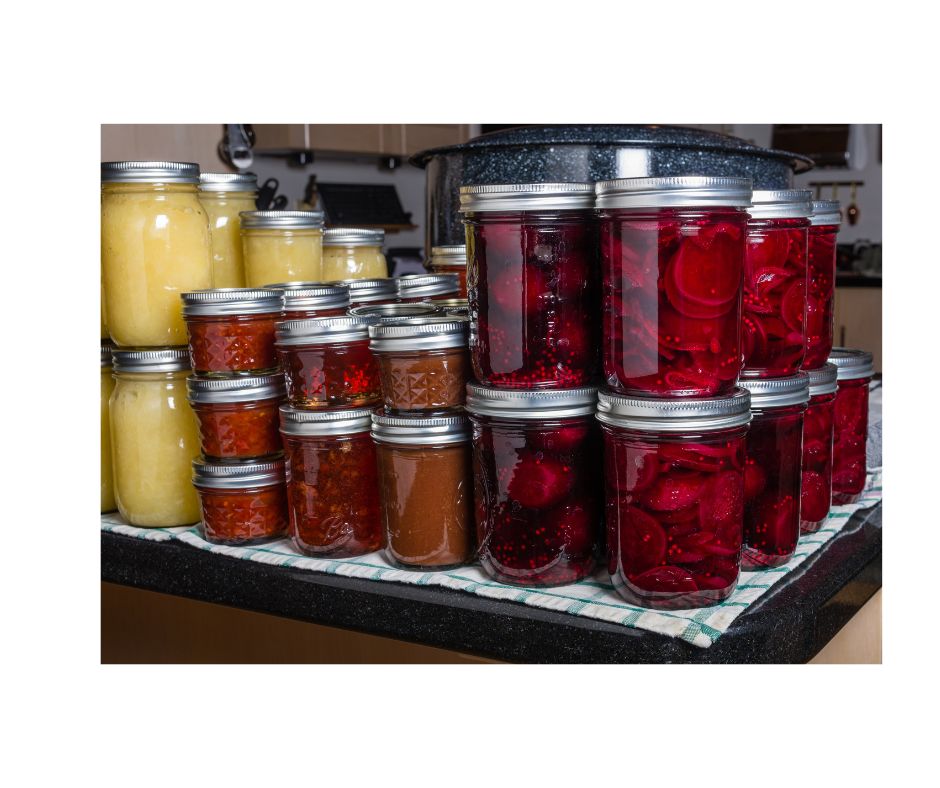
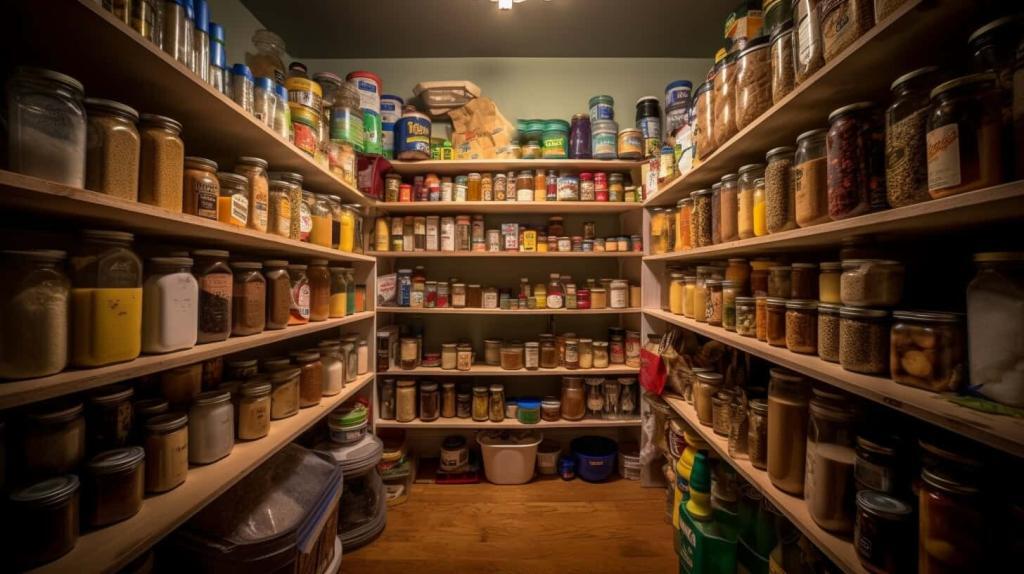
Photo of a stocked pantry.
Conclusion
In conclusion, prepping isn’t just for extremists or conspiracy theorists. It’s a practical approach to ensuring the safety and well-being of yourself and your loved ones in the face of emergencies.
By taking steps to be financially prepared, stocking up on essential supplies, building a bug out bag, and developing survival skills, you can take control of your future and be ready for the unexpected.
Don’t wait for disaster to strike – start prepping today.
Let’s be honest. We all have those moments when we doubt our ability to handle unpredictable events.
For example, have you ever been caught in a situation where you wondered, “What would I do if a fire tornado came barreling toward me?” Well, it’s normal to feel a bit unprepared for such a high-stakes scenario, and that’s okay — that’s why we’re here to help.
But here’s some good news: with the right knowledge and actions, even a fire tornado can be survivable.
In this article, we’ve provided you a guide on how to survive a fire tornado to help ease that nagging guilt of not being ready for what life might throw at us.
Ready to conquer this fear and gain some lifesaving insights? Good! Let’s dive right in and make sure you’re equipped to face the whirlwind when, or if, it comes.
Before diving into survival strategies and preparation measures for a fire tornado, let’s first gain a clear understanding of what these phenomena actually are.
Formation And CharacteristicsOf Fire Tornadoes
Fire tornadoes, also known as fire devils, fire swirls, or fire twisters, are a rare event and fascinating natural phenomenon. They occur when intense heat from wildfires causes the air to rise and start rotating.
As the air gains momentum, it can form a whirling column of fire, smoke, and debris. Imagine a blender full of flaming twigs and leaves spinning at high speed — that’s somewhat how a fire tornado looks and behaves.
These whirls can then contract a fire into a tornado-like vortex that sucks in debris and combustible gasses.
They can be up to 500 meters tall, move at speeds of up to 22 mph, and have a temperature exceeding 2000 °F.
These massive fire tornadoes can be incredibly dangerous due to their sheer size and intensity. Some even possess the same destructive power as mega tornadoes.
So how can you recognize one when it’s happening around you? Imagine a typical tornado funnel, but instead of wind and rain, it’s filled with flames, smoke, and glowing embers.
Fire tornadoes can also produce their own wind, further spreading wildfires and making them even more difficult to control.
H/T to @KnowableMagazine for this video.
Difference Between Fire Tornadoes And Severe Thunderstorms
While both fire tornadoes and severe thunderstorms can cause widespread damage, there are some key differences between the two.
For one, fire tornadoes are usually born from wildfires, while severe thunderstorms are caused by unstable atmospheric conditions.
A fire tornado’s destructive force comes from intense heat, flames, and smoke, whereas severe thunderstorms create damage through strong wind speeds, heavy rain, hail, and lightning.
In other words, a fire tornado is like a regular tornado with the added danger of fire combined into one terrifying event.
How To Survive A Fire Tornado
Fire tornadoes are a rare but terrifying natural phenomenon.
Combining the destructive force of a tornado with the intense heat of a wildfire. These spiraling infernos present a significant risk to anyone in their path.
However, by understanding what they are and how to react, you can increase your chances of survival.
Here’s a guide on surviving a fire tornado:
1. Stay Informed And Be Prepared During A Fire Tornado
Keep yourself updated with the latest weather conditions, especially if you are living in or traveling to fire-prone areas.
Sign up for emergency alerts on your phone, listen to the radio for updates, and follow reliable sources on social media.
The best way to survive a fire tornado is not to be near one at all. If you receive an evacuation order or believe a fire tornado may be developing, leave the area immediately.
Choose a route that moves away from the fire and head towards a built-up area, if possible.
3. Find ShelterDuring A Fire Tornado
If you’re caught in the open and unable to evacuate, find a shelter that can protect you from the heat and smoke.
When seeking shelter in a building, head towards the underground shelter or the lowest floor. Make sure to cover yourself with soil or a wet blanket to shield against the heat.
But you should be cautious; avoid long-span buildings, such as shopping malls, theaters, and gymnasiums, as their roofs might be supported only by the walls.
Look for a small, windowless room like a closet or a bathroom, which will provide the most protection from the fire tornado.
In case a window breaks due to the extreme heat or wind, it’s wise to cover yourself with anything you can find, like a mattress, sleeping bag, or blankets to shield yourself from flying debris.
While evacuating and taking shelter, it’s essential to tune in to your local disaster services or weather broadcasts for updates.
Keep your mobile device charged, and if possible, pack a portable charger so that you can stay informed and communicate if necessary.
4. Fire Tornado: Stay Low and Cover Up
Cover your mouth and nose with a cloth to avoid inhaling smoke, and try to stay as low as possible while moving to a safer place.
5. Don’t Drive Through Smoke Or FlamesDuring A Fire Tornado
If you’re in a vehicle, do not attempt to drive through smoke or flames. This can lead to engine failure or a loss of visibility.
Instead, park your vehicle in a clear area, stay inside, and keep the engine running so the air conditioning can work.
6. After A Fire Tornado
Once the fire tornado has passed, check yourself and those around you for any injuries.
Contact emergency services and avoid touching any hot or burning objects.
Recognizing Fire Tornado Risks
Warning SignsOf A Fire Tornado
To successfully survive a fire tornado, it’s crucial to identify tornado warning signs as early as possible. You should pay attention to the weather conditions, particularly when there’s an increased risk of wildfire.
Keep an eye out for a rotating funnel-shaped cloud or an approaching cloud of debris — these are telltale indicators of a tornado.
When it comes to fire tornadoes, a loud roar could signal impending danger. This sound is often compared to a freight train, so if you hear something similar, take it as a sign to act quickly.
Be sure to tune into the National Weather Service or your local NOAA Weather Radio station for tornado watches and warnings in your area.
Areas Prone to Fire Tornadoes
With severe weather conditions becoming more frequent in the United States, it’s important to be aware of the regions more susceptible to fire tornadoes.
The Midwest and the Southeast are known for having a higher risk for tornadoes, and areas with abundant dry vegetation, underbrush, or shrublands are particularly vulnerable to wildfires.
In this case, combining these two factors can create the perfect storm: fire tornadoes.
Remember, recognizing the warning signs and areas prone to fire tornadoes is key to staying safe during these intense natural events.
Always stay informed and be vigilant, so you’ll be better equipped to navigate and survive a fire tornado should one come your way.
Preparing For A Fire Tornado
Creating A Home Safety PlanFor A Fire Tornado
To prepare for a fire tornado, you should begin by creating a home safety plan that includes all your family members.
Discuss the safest place in your home for everyone to gather during a fire tornado. This spot should ideally be on the lowest floor, in an interior room with no windows.
Also, make sure everyone knows how to get there quickly in case of an emergency.
It’s essential to educate family members about the risks of gas lines and power lines during a fire tornado.
Make sure everyone knows how to shut off gas lines and stay away from any downed power lines in the area.
It would help if you also had a designated meeting point outside your home in case an evacuation becomes necessary.
Gathering Essential SuppliesFor A Fire Tornado
When facing the possibility of a fire tornado, it’s important to have essential supplies handy. As a part of your preparations, gather items such as the following:
A battery-powered weather radio to stay informed of any watches or warnings
A fire extinguisher for any small fires that might break out
Enough non-perishable food and water for at least three days
Flashlights or headlamps with extra batteries
Sturdy shoes and protective clothing
Protecting Your Family During A Fire Tornado
Finding The Safest Location In Your HomeDuring A Fire Tornado
When a fire tornado threatens your safety, it’s crucial to find the best spot in your home to take shelter.
Your priority is to choose a room with no windows on the lowest level of your house. Basements are ideal because they provide the most protection from the heat and flying debris.
However, if a basement isn’t available, opt for a small, windowless room like a closet or bathroom.
Keep doors closed to maintain a barrier between you and the fire tornado, and stay low to the ground to reduce smoke inhalation.
Communicating And Staying InformedDuring A Fire Tornado
Staying informed and maintaining reliable communication channels are vital during a fire tornado. Ensure you have a battery-powered or hand-cranked radio to receive emergency broadcasts and weather updates.
Your mobile phone also serves as a vital link to the outside world, so keep it charged and close at hand. Create a family communication plan that includes important phone numbers and emergency contacts.
Discuss this plan with your family members and establish a meeting point in case you get separated.
It’s also a good idea to familiarize yourself with your community’s emergency plans and evacuation routes, so you know where to go in case you need to leave your home.
Fire Tornado Safety In Specific Locations
Navigating a fire tornado can be daunting, but knowing how to stay safe in specific locations can make all the difference.
In this section, we will discuss safety precautions for mobile homes and trailer parks, as well as collaborating with local fire departments.
Fire Tornadoes: Mobile Homes And Trailer Parks
Mobile homes and trailer parks are particularly vulnerable to fire tornadoes. If you live in one of these structures, it’s essential to have a plan in place.
First, familiarize yourself with your park’s evacuation routes and community shelters.
In the event of a fire tornado, you’ll want to leave your mobile home immediately, as it can’t provide adequate protection against such strong forces.
Ensure your emergency kit is always up to date, containing essentials like water, non-perishable food, and a first-aid kit.
Keep important documents like identification and insurance information in a waterproof and fireproof container, ready to grab in case of an evacuation.
Collaborating With Local Fire DepartmentsAbout Fire Tornadoes
Local fire departments play a critical role in fire tornado preparedness and response. So it’s a good idea to establish a relationship with them and gather information on what to expect in case of a fire tornado in your area.
Be proactive and attend community meetings or workshops hosted by the fire department to ensure you’re well-informed on fire safety practices.
They may offer valuable insights on safety measures for your specific location, potential hazards in your area, and tips on building a fire-resistant home.
Also, consider volunteering with your fire department’s auxiliary group or community organizations that work closely with first responders during emergencies.
This collaboration not only helps strengthen your community’s preparedness but allows you to gain invaluable knowledge and skills in the process.
Tailor your fire tornado safety plan according to your specific location, whether it’s a mobile home, trailer park, or permanent residence.
Dealing With FireTornadoes
Post-Fire Tornado Precautions
When you’re caught in a potentially dangerous situation with new or large fires, it’s important to take precautions. These fires can quickly escalate into fire tornadoes, so it’s crucial to be prepared.
Keep an eye out for any signs of a fire tornado forming, such as swirling smoke and intense heat.
Remember to stay alert and avoid getting cornered by flames. It’s always best to have multiple escape routes in case one gets blocked.
The first thing you should do is try to evacuate the area as quickly as possible. You can follow these simple steps to increase your chances of survival:
Keep a safe distance from the fire’s path
Stay low and cover your nose and mouth to avoid inhaling smoke
Stick to cleared areas without dense vegetation to reduce your exposure to embers and flames
Cooperating With Emergency ServicesDuring A Fire Tornado
During a fire tornado event, it’s essential to cooperate with emergency services. They have the knowledge, skills, and resources to effectively deal with new and large fires.
Here’s how you can assist them in their efforts:
Follow their instructions: Emergency service personnel are trained to handle such situations. Trust their guidance and adhere to their instructions for a better chance of survival.
Stay informed: Keep yourself updated on the progress of the fire through trusted sources, such as local news outlets or social media platforms. This will help you plan your next move accordingly.
Offer assistance if appropriate: If you come across people who need help, offer aid without putting yourself in danger. Remember, the primary goal is to ensure everyone’s safety, including your own.
Frequently Asked Questions About How To Survive A Fire Tornado
How long can a fire tornado last?
Fire tornadoes can vary in duration, depending on the conditions fueling them. In general, they can last anywhere from a few minutes to over an hour.
The duration is influenced by factors such as the intensity of the fire, wind conditions, and the availability of fuel.
How can I create a fire tornado preparedness plan?
Developing a preparedness plan for a fire tornado involves the following steps:
Identify potential risks in your area.
Establish an emergency communication plan with family members.
Determine possible evacuation routes and safe locations.
Regularly review and update the plan as needed.
Can I safely shelter in place during a fire tornado?
Sheltering in place is generally not recommended during a fire tornado, as they can cause significant destruction and may change direction without warning.
It’s best to evacuate as soon as possible and seek refuge in a safer location.
When should I evacuate due to a fire tornado?
It’s crucial to evacuate immediately if authorities issue an evacuation order or if you feel personally threatened by a fire tornado. Don’t delay; get moving as soon as possible to protect yourself and your family.
What supplies should I have on hand for a fire tornado?
In case of a fire tornado, it’s essential to have supplies such as water, non-perishable food, a first-aid kit, and a flashlight with extra batteries.
Also, consider having a battery-operated or hand-crank radio to stay informed of the latest weather updates and emergency information.
Why are fire tornadoes rare?
Fire tornadoes are relatively rare because they require specific conditions to form, such as an intense fire, dry fuels, and strong winds.
While these conditions can occur separately, it’s not often they all come together simultaneously to create the phenomenon of a fire tornado.
However, with climate change and an increase in wildfire incidents, it’s essential to stay prepared and informed about this dangerous natural event.
How To Survive A Fire Tornado: Key Takeaways
In the end, surviving a fire tornado is all about preparation and quick thinking. You’ve got to be aware of your surroundings, stay informed, and keep your cool, even when facing a fearsome phenomenon like this.
Your best strategy is to stay one step ahead. Keep an eye on your local weather and fire reports, especially if you reside in regions known for wildfires.
It’s essential to have a concrete evacuation plan and be well-acquainted with all possible exit routes. When there’s a threat of a fire tornado, the time to act is immediately.
Remember, the quicker you respond, the safer you’ll be.
Keep in mind the following:
Gaining an understanding of fire tornadoes can ease uncertainty and improve preparedness
Having a well-planned strategy is crucial for surviving a fire tornado and protecting your family
Recognizing fire tornado risks and being proactive can make a significant difference in safety
In the face of danger, you might discover a strength you didn’t know you had. And despite the challenge, there’s a great deal to learn — about fire tornadoes, about yourself, and about the power of resilience.
So, gear up, stay alert, and know that you’ve got what it takes to weather the storm, or in this case, the fire tornado.
You don’t buy into empty promises. Neither do you let your guard down with flowery words. You’ve felt the prickle of unease as the world turns unpredictable, and like many, you’re done with the blind optimism that leaves so many vulnerable.
But you? You’re different. While others bury their heads in the sand, you take action. Because you know the bedrock of survival isn’t hope, it’s preparedness. Real, tangible, no-nonsense readiness for the “what ifs” that others dismiss.
You’re not looking for feel-good fluff. You need straight-shooting, actionable guidance, and that’s exactly what we’re here to offer. Together, we’ll arm ourselves with not just the tools but the mindset needed to stand tall in the face of adversity.
In a world that’s increasingly unpredictable, join us in being the undeniable certainty. Let’s do this. No hype. Just solid, unwavering preparedness.
What Is Prepping And Why Is It Important?
Prepping — or more accurately preparedness — is about being ready to handle crises, emergencies, or disasters. It’s all about planning, training, and equipping yourself with what you need to tackle unexpected situations effectively.
Why is it so important, you ask? Well, preparedness can quite literally be a lifesaver. It can lessen the impact of disasters, speed up recovery times, and, in many cases, prevent harmful situations from escalating.
Being prepared also gives you a measure of control in uncertain times. It helps ease your anxiety because you know you’re as ready as you can be for whatever comes your way.
And it’s not just about having a plan but also about having the courage to face the unknown and adapt on the fly.
In a world full of unpredictability, preparedness is our defense mechanism. It’s like carrying an umbrella even when the sky is clear. It may not stop the storm, but it will definitely keep us dry.
So let’s work on our preparedness game today, for a safer and more secure tomorrow.
Historical Perspective
Instances from History That Highlight the Importance of Preparedness
Let’s step into the time machine for a bit, shall we? The history of our world is etched with incidents that have shown us, time and again, how crucial preparedness is.
79 AD: The bustling Roman city of Pompeii
Without a proper understanding of Mount Vesuvius’ volcanic nature, or an evacuation plan in place, the city was decimated within 24 hours of the mountain’s catastrophic eruption.
Over 2000 lives were lost, and an entire city was wiped out, because they weren’t prepared.
1918: The Spanish Flu Pandemic Sweeps Across the Globe
Its deadly grip claiming the lives of tens of millions. Hospitals were overwhelmed, economies crumbled, and communities fractured.
The world was caught off-guard without effective containment measures, medical infrastructures, or health protocols.
1940: World War II, The Blitz of London
Here, London had a plan. Air-raid shelters were built, children were evacuated to the countryside, and citizens were trained in firefighting and first aid.
The city was battered, yes, but it stood strong, demonstrating that a well-prepared community can weather even the harshest of storms.
2004: The Catastrophic Indian Ocean Tsunami
Many of the regions affected lacked early warning systems or disaster response plans. The tsunami claimed nearly 230,000 to 280,000 lives, becoming one of the deadliest natural disasters in recorded history.
The aftermath exposed glaring gaps in coastal preparedness and sparked a global conversation about the necessity of early warning systems.
2020:COVID-19 Pandemic
And who can forget the year the world stood still in the face of the COVID-19 pandemic? This invisible enemy caught nations off guard, exposed weaknesses in health infrastructures, and redefined our understanding of “normal.”
It was a wake-up call for preparedness on a personal, community, and global level, extending beyond physical health into domains like mental well-being and financial stability.
So what’s the lesson in all these historical vignettes? It’s this: preparedness is not just an option; it’s a lifeline.
The difference between Pompeii and London wasn’t just a matter of technological advancements or times; it was about the recognition of potential threats and the implementation of plans to counter them.
Surviving a disaster isn’t merely a game of chance. History has proven that time and again. Instead, it’s about arming yourself with knowledge, gearing up with the right tools, and being mentally and emotionally fortified to tackle whatever life decides to throw your way.
As we dive deeper into the facets of preparedness, remember this: the past, with all its triumphs and tragedies, is our guide.
It offers lessons, stark reminders of what can happen when we’re caught off guard, and powerful stories of resilience when we’re ready.
Evolution of Preparedness Over Time
Having taken a trip through the pages of history, it’s now time to observe the gears of time in action.
Centuries ago, humanity was at the whim of nature, equipped with nothing more than gut instincts and traditional wisdom to foresee calamities. You can imagine how well that went down, right? But hey, that’s where we started.
Then, communities began recognizing patterns. They noticed that floods often followed torrential rains or that certain stars appearing in the sky signaled the beginning of hurricane seasons. The result? They developed rudimentary warning systems and began modifying their habitats and lifestyles according to these patterns.
Come the Industrial Revolution, and with it, technological leaps. Suddenly, we had seismographs to detect earthquakes, barometers to predict storms, and telegraphs to disseminate information quickly. Preparedness became a bit more systematic, a bit more scientific.
The 20th century kicked it up another notch. Governments started establishing dedicated disaster management agencies.
Civil defense drills became a common practice, especially during the World Wars and the Cold War era. We saw the rise of comprehensive disaster management plans, contingency strategies, and large-scale drills.
But hold on, we weren’t done yet. The advent of the internet and advanced technology brought an avalanche of change.
Satellite imagery for weather forecasting, online platforms for real-time information dissemination, advanced simulation models for risk assessments, and hey, even apps for personal preparedness — we’d come a long way from interpreting star patterns!
And today, in the 21st century, we’re refining and expanding our understanding of preparedness like never before. It’s not just about physical readiness anymore.
We’re talking about mental health resilience, financial stability, digital security, and sustainable living.
The evolution of preparedness has been a fascinating journey, shaped by technological advancements, societal changes, and lessons from past disasters.
But here’s the kicker: it’s an ongoing journey. The wheel’s still turning. As our world continues to change, the challenges we face will too. And as they do, so must our preparedness strategies.
Different Aspects Of Preparedness
Personal Preparedness
Let’s face it, in the game of life, being prepared isn’t just about owning a survival kit or knowing the nearest exit routes. Nope. It’s about being ready, head to toe, inside out.
And where does it all begin? With you. Personal preparedness.
Health and Medical Preparedness
We’ve all heard the age-old saying, “Health is wealth,” right? And when disaster strikes, this old adage shines bright as day.
No amount of gear or resources can make up for a body and mind that’s not prepared. That’s why it’s essential to maintain regular check ups and keep a tab on your vitals.
Also, a basic understanding of first aid and CPR? It can be a game-changer in an emergency situation.
Plus, let’s not forget the importance of regular exercise and a balanced diet to keep you fit and ready to face any challenges.
Mental and Emotional Preparedness
When the world’s going belly-up, it’s not just physical strength that’ll pull you through.
Your mental fortitude will play a significant role. This can include learning stress management techniques, practicing mindfulness, or even seeking professional help to address anxieties or phobias related to certain scenarios.
After all, the strongest fort is the one where the walls and the people inside are both ready for the storm, right?
Financial Preparedness
Now, let’s talk dough. Disasters, big or small, can wreak havoc on your finances if you’re not prepared.
Job loss, property damage, medical bills — they can add up to a pretty penny. That’s where financial preparedness comes in.
It’s about creating and maintaining an emergency fund, having adequate insurance coverage, and managing your debts effectively.
It’s not about having a treasure chest but about ensuring you won’t go bankrupt when life decides to play hardball.
Preparedness boils down to a resilient mind, a healthy body, and financial security. Yet, it’s a personal journey, unique to your circumstances.
Your readiness could mean physical fitness, a solid savings account, or a calm mind amidst chaos. It’s about identifying what readiness means for you and building a unique resilience step by step. This isn’t a destination, but a journey towards a more prepared you.
Household Preparedness
It’s only fair that we get your nest ready too, right? Let’s get into household preparedness.
Home Safety and Security
Keeping your home safe and secure is about more than just strong doors and good locks (though they’re important too!).
We’re talking about fire safety — smoke detectors, fire extinguishers, clear exit paths. It’s about maintaining your home, checking for any potential risks like faulty wiring or gas leaks.
Also, don’t forget about safety from intruders or during civil unrest. A well-prepared home is a fortress, ready to protect you from threats inside and out.
Next up is sustenance, the vital fuel that keeps you going: nourishment and hydration.
What if the local supermarkets are closed or the water supply is interrupted? What then? Maintaining a stockpile of non-perishable food and drinkable water can be your saving grace. Consider rain water storage or planting a survival garden.
Be sure to rotate your supplies to ensure freshness. And remember, it’s not just about accumulating a large quantity, but also ensuring a varied and nutritious selection.
Power and Utility Management
What happens if the power goes out or if there’s a gas shortage? That’s where power and utility management comes in.
Consider alternate power sources like generators or solar panels. Learn how to safely shut off your utilities if needed. And hey, a few candles, flashlights and matchsticks tucked away won’t hurt, either!
Emergency Kits and Supplies
Last but not least, have emergency kits and supplies on hand.
A first aid kit, medications, important documents, some cash, clothes, and basic tools are the essentials that’ll help you tide over until help arrives or you’re able to establish a semblance of normalcy.
But here’s the thing: a well-prepared home isn’t just about the stuff, it’s about the people in it.
Make sure everyone in your home knows what to do in an emergency. Practice your escape plans, teach your kids how to dial emergency numbers, discuss where you’d meet if you get separated.
Community Preparedness
DISCLAIMER: It’s important to discuss community preparedness in the broader context of prepping because it’s relevant, and because we value human life. However, prepper basics apply: Be wary about sharing intel about your preps with others. Because when disaster strikes, you don’t want a horde of people showing up at your door.
Now we’ve got ourselves prepared, we’ve got our homes ready, but what about the community we live in? For instance, the people next door, across the street, around the block.
Because here’s the thing: in a crisis, we’re stronger together. So, let’s delve into community preparedness.
Preparedness isn’t a solo mission. In times of crisis, communities often stand together, and become each other’s support systems. So, let’s explore how you can involve your community in preparedness plans.
Start by understanding your community. What are the local risks? What resources are available? What is the community’s emergency response plan?
Community Emergency Plans
Your community’s emergency plans could be city-wide evacuation routes, designated shelters, emergency communication systems, or local emergency contacts.
Knowing these details can make a world of difference when disaster strikes. It’s not just about having a roadmap to safety, but also about knowing where you fit into the bigger picture.
Neighborhood Watch Programs
Then we have neighborhood watch programs. But we’re not just talking about crime here.
It’s about neighbors looking out for each other, recognizing potential risks and threats, and alerting each other and the authorities. A little vigilance can go a long way in keeping your community safe.
Community Support Networks
And finally, building community support networks, which is about people coming together, pooling resources, sharing skills, helping each other.
It’s about the retired nurse on your street offering first aid training, the local school serving as a temporary shelter, or the community center organizing food drives.
It’s also about realizing that together, you’re more resilient, more resourceful, and more prepared.
Remember, “it takes a village” isn’t just a saying. It’s a time-tested truth, especially when it comes to preparedness.
By involving your community in preparedness plans, you’re not just securing your household… you’re helping to safeguard your entire “village.”
Community preparedness means you’re not alone. It means when the power goes out, you can team up with your neighbors to pool generators. Or, when a hurricane warning is issued, you can help each other secure homes.
It’s about transforming a group of individuals into a community of helpers, supporters, and survivors. But how do you make it happen? Well, it starts with a conversation.
Talk to your neighbors, participate in local meetings, and engage with community organizations. Share your knowledge and learn from others. Offer help, seek support.
Disaster Preparedness
Now what about the big, scary “what ifs” that keep us up at night?
Natural disasters, technological mishaps, pandemics, or even acts of terror — let’s talk about disaster preparedness.
Natural Disasters
Whether it’s hurricanes, wildfires, floods, earthquakes, or tornadoes, Mother Nature sure knows how to throw a curveball.
Preparing for natural disasters involves knowing your risks, being aware of warning signs and systems, understanding evacuation routes and shelters, and having a disaster-specific plan and kit.
It’s about being as ready as you can be for a force that’s beyond human control.
Technological and Accidental Hazards
Nature isn’t the only potential threat. Technological or accidental hazards like power outages, chemical spills, nuclear accidents, or even something as common as a house fire — they all require their own level of preparedness.
Understanding these risks and knowing how to react could mean the difference between panic and safety.
Pandemic Preparedness
Then comes the menace that we’ve become all too familiar with: pandemic. The last few years have shown us how a tiny virus can upend the world.
Pandemic preparedness is about more than just masks and hand sanitizers.
It’s about health hygiene, immunizations, communication plans, remote work and learning setups, mental health resources, and so much more.
Terrorist Hazards
And finally, a threat that’s as unsettling as it is real: terrorism.
Preparing for such events involves staying informed about the threat levels, understanding how to react during an attack, knowing the steps to take after such an event, and ensuring you’re mentally and emotionally equipped to handle such a crisis.
Disaster preparedness, in essence, is about understanding the unique challenges each disaster presents and gearing up accordingly.
It’s not just about surviving the disaster itself, but also managing its aftermath — the disruptions, the losses, the trauma.
Remember, disaster preparedness isn’t about living in fear. It’s about living with awareness and readiness. It’s about realizing that while we can’t control these events, we can control how we respond to them.
Digital Preparedness
Digital preparedness involves fortifying your online presence, safeguarding your digital assets, and arming yourself with the knowledge and skills to navigate the internet securely.
Cybersecurity
This is the foundation of digital preparedness. Implementing robust passwords, enabling multi-factor authentication, and regularly updating software are just a few ways to secure your digital fortress.
It’s akin to installing a high-tech alarm system for your online persona, protecting your data from prying eyes.
Digital Asset Management
We’re talking about anything that exists in a binary format and comes with the right to use. Photos, emails, social media accounts, digital currencies, online banking — these are all part of your digital estate.
Preparing involves identifying these assets, protecting them, and determining how they should be handled in case something happens to you. Think of it as creating a will for your digital life.
Social Media and Online Presence
In today’s connected world, your online persona can be just as important as your real-world identity.
Managing this aspect of digital preparedness can include setting privacy settings, controlling what information you share, and being cautious about online interactions.
It’s about defining your digital footprint, leaving a mark that’s uniquely you.
Navigating the digital world can feel like traversing a vast, unpredictable ocean. Threats could come from anywhere, morphing, adapting, catching you unawares.
But with proper digital preparedness, you can set sail confidently, steering clear of dangers, riding the waves of the digital revolution.
Your online persona, digital assets, and cyber sanctuary are worth safeguarding. Because in our interconnected world, being digitally prepared is not just a luxury, it’s a necessity.
Preparedness for Different Groups
Families with Children
Okay, let’s get personal for a minute. Think about your family. Your kids. Those lively, curious little beings who look up to you for everything.
Now think about them in a crisis. A bit of a sobering thought, isn’t it? But that’s where preparedness steps in. So, let’s chat about preparedness for families with children.
Kids add a unique dimension to preparedness. It’s not just about ensuring their safety, but also about equipping them with knowledge, skills, and emotional resilience to handle crisis situations.
First things first: communication. It’s vital to talk to kids about potential risks and emergency plans, but in a way that’s appropriate for their age and comprehension levels. It’s a delicate balance — you want to educate, not scare. You want to empower, not overwhelm.
Next up, drills and routines. Kids learn best by doing, so involve them in evacuation drills, first-aid exercises, and other preparedness activities.
Make it a family affair, a part of your regular routine. It’ll help them understand the practical aspects of preparedness, and it’ll also give them a sense of control, which can be a real game-changer in a crisis.
Then let’s not forget about their emotional well-being. Disasters can be traumatic, especially for young minds. Having resources to help them cope with stress, fear, and uncertainty can be crucial.
This could be as simple as a comforting toy, sleeping bag, bedroll or blanket, or more structured like access to child-friendly counseling services or support groups.
And finally, remember to include kids’ needs in your emergency kits. This goes beyond food, water, and medical supplies. Think diapers for the little ones, formula milk if needed, activity books or games to keep them occupied, and familiar snacks to provide a sense of comfort.
The goal is to ensure their physical needs are met but also to create an environment that’s as normal and reassuring as possible in a crisis situation.
Elderly Individuals
From a spry 65-year-old enjoying their newfound retirement freedom, to those deep into their twilight years requiring more care, preparedness takes on a different shade for the elderly.
Emergencies can be daunting for anyone, but for our older adults, these situations can present even more significant challenges.
Mobility issues, chronic diseases, sensory impairments, or even cognitive decline can all come into play, complicating the response.
However, with the right planning and tools, we can help ensure their safety and dignity during crises.
One of the first steps is communication. Make sure they understand potential threats and emergency procedures.
Secondly, consider their unique health and mobility needs. If they rely on devices like hearing aids, walkers, or oxygen tanks, have spares available and easily accessible. Make sure to have a supply of prescription medications and a copy of their medical history handy.
Let’s also not forget the psychological aspect. Isolation can be a real threat during emergencies, leading to a heightened sense of fear and uncertainty. Having a support network is crucial.
Whether it’s neighbors, friends, or professional caregivers, ensure there’s someone they can rely on.
Finally, remember that preparedness for the elderly isn’t just about survival; it’s about ensuring their comfort and dignity. So their emergency kit should include familiar items that bring them comfort, be it a favorite snack, a treasured book, or a family photo.
People With Disabilities
People with disabilities are a group whose unique needs demand special attention during emergencies. Each person’s requirements will vary, making it all the more critical to address individual needs in preparedness plans.
Start with communication. As always, this is key. Discuss potential risks, emergency protocols, and evacuation plans, ensuring the information is accessible — be it Braille, large print, sign language, or simplified formats.
Practical considerations are essential. Physical, sensory, intellectual, or mental health needs dictate the specifics of their emergency plans.
Someone using a wheelchair might need a ramp for evacuation, while a person with visual impairment could require detailed auditory instructions.
Don’t forget about medical requirements. Keep a stock of necessary medications, a detailed account of medical conditions, and any specific medical equipment they might need.
Support networks are crucial. Whether personal care attendants, family, or friends, ensure there’s a reliable group that can assist.
Consider registering with local emergency services that provide help to individuals with disabilities during crises.
Lastly, consider the psychological impact of emergencies. Being prepared isn’t just about survival, but also about providing individuals the emotional tools to cope with sudden changes in their routine.
Pet Owners
And now, let’s not forget about our furry, feathered, or scaled friends — our pets. If you’re a pet owner, your preparedness strategy isn’t just about you.
You’ve got a little one (or maybe not so little) counting on you, too. So, let’s talk about pet-specific preparedness.
For starters, identification is critical. Ensure your pet has a collar with up-to-date contact information. Better yet, consider getting them microchipped.
In a chaotic evacuation situation, these small steps can make a significant difference in reuniting you with your pet.
Next, think about your pet’s specific needs in an emergency. Does your dog have a special diet? Does your cat need specific medication? Do you have a carrier for your bird or a tank for your fish? Ensure these needs are met in your emergency supplies.
Remember to include basic pet supplies in your emergency kit: food, water, a leash or carrier, litter and a litter box, and a first aid kit.
But don’t stop there. Think about their comfort, too. Familiar items like a favorite toy or pet bed can help reduce their stress in an unfamiliar environment.
Planning for evacuation? Remember to check if your intended shelter or hotel allows pets. Not all do. Research pet-friendly options in advance to prevent last-minute surprises.
Finally, practice drills with your pet. Get them used to entering their carrier or being on a leash quickly. Familiarity with these procedures can make the real deal less stressful for both of you.
Understanding and Developing Preparedness Plans
Risk Assessment and Management
Risk assessment and management might not be the most exciting part of preparedness, but believe me, it’s the foundation on which all else stands.
It may sound a bit technical, but really, risk assessment and management is about getting to know your enemy — the risks you’re likely to face.
Think about your geographical location. Are you prone to earthquakes or hurricanes? Or maybe wildfires? Then there’s your personal situation. Do you live alone or have a large family? Any elderly folks or people with disabilities to care for? Pets, perhaps?
Next, consider the less obvious risks. Could you be affected by a power outage or a water supply disruption? What about a personal medical emergency or a job loss? Are cyber threats a concern?
Once you’ve identified the risks, it’s time to measure them. And yes, it’s a bit of a juggling act. You’re looking at the likelihood of a risk occurring versus its potential impact. A bit like juggling flaming torches — it’s all about managing not to get burnt!
Now you’ve got a clear picture of your risk landscape. Time to plan your defenses.
This could range from securing your home against hurricanes, setting up an emergency fund for financial crises, or getting that long-overdue health check-up.
Developing Personal Preparedness Plans
A well-designed personal preparedness plan is like a roadmap guiding you through any unforeseen event. So let’s begin your journey toward achieving that robust readiness.
Needs Assessment: A personal preparedness plan begins with a clear assessment of your needs. What are your daily requirements in terms of food, medication, or special needs? Understanding your unique needs will help tailor a plan that’s just right for you.
Potential Risks: What are the most likely emergencies you might face? These could be linked to your geographical location (like hurricanes or earthquakes), your health, or your lifestyle. Don’t forget to factor in the unpredictables of life, too, like financial emergencies.
Devise Strategies To Address The Risks: This could involve building up a savings buffer, planning an evacuation route, or learning new skills like first aid or cooking. Always have a backup plan — flexibility is crucial in times of crisis.
Communication: Define your key contacts in times of crisis, and ensure they are aware of and understand their role. Plan how you will receive emergency alerts and warnings.
Document Your Plan: Write it down and keep it in an accessible place. Remember, a plan is only as good as its execution, so make it clear and easy to follow.
Creating a personal preparedness plan is essentially about knowing yourself and your environment, then making practical decisions based on this knowledge.
Creating Household Preparedness Plans
A household preparedness plan serves as your family’s tactical guide when crises arise. It sketches out the framework for your family’s reactions and recovery strategies during emergencies.
Now let’s jump into the exciting task of designing this master strategy for your household.
First, gather everyone for a family meeting. Everyone’s input is valuable. Kids can often surprise you with their innovative ideas, and they’ll feel more invested in a plan they helped create.
Then review the risks you’ve identified earlier, and brainstorm about what actions to take for each of them. For instance, where would you go during a fire, or how to stay safe during a hurricane? Discussing different scenarios will help your family feel more comfortable when facing them.
Next, assign roles and responsibilities. Who grabs the emergency kit? Who handles first aid? Who ensures all family members are accounted for? Clear roles can prevent chaos and save precious time during emergencies.
Don’t forget to discuss communication plans. How will you stay in touch if cell towers are down? What’s the plan if family members are separated? Identifying a local and an out-of-town contact everyone can call, or selecting a common meeting place can solve these issues.
Lastly, plan for special needs. Does anyone take medication that should be in your emergency kit? Do you have pets to consider? Is there an elderly person who may need special assistance? Addressing these beforehand can prevent many headaches later.
Once your plan is ready, practice it. Run drills. Make adjustments as necessary. The more you practice, the more it becomes second nature.
Every strand of preparation you weave in strengthens the net, making your household more resilient in facing whatever comes your way.
Building Disaster Specific Preparedness Plans
Each disaster is a unique beast, with its peculiar challenges and demands. So, a “one-size-fits-all” approach might not cut it.
For each potential disaster, your plan should outline: how to stay informed (where to get accurate information), how to react (what steps to take), and how to recover (what resources can aid in recovery).
Let’s say you live in a hurricane-prone area. Your plan might include tuning into a trusted weather station for updates, evacuating when advised by local authorities, and having a list of local recovery resources such as shelters or aid agencies.
A wildfire preparedness plan might involve subscribing to local fire alerts, creating a defensible space around your house, and having evacuation routes and backup routes mapped out.
If an earthquake is a likely threat, your plan could encompass participating in the “Great ShakeOut” drills, knowing how to “Drop, Cover, and Hold On,” and having a plan to reconnect with family members after the quake.
For pandemics, it’s about staying informed through credible health organizations, knowing preventive measures, understanding when and how to self-isolate, and having a list of local medical facilities and hotlines.
Your plan should also account for the aftermath. Disasters often leave a trail of challenges in their wake — power outages, limited mobility, communication breakdowns, psychological stress, etc. Being ready to tackle these can smooth your recovery journey.
It’s vital to involve all family members in these plans and run regular drills. Familiarity reduces fear and can lead to more effective response in real situations.
Creating disaster-specific plans is about being reasonably prepared, adaptable, and resilient. And each plan you create strengthens your overall preparedness, like adding more arrows to your quiver, ensuring you’re not caught off-guard when disaster strikes.
Implementing and Maintaining Preparedness Plans
Practice and Drills
There’s an old saying that goes, “Practice makes perfect.” And in the world of preparedness, this is no exception.
It’s not enough to just have plans; it’s crucial to practice them, to transform them from theory to muscle memory.
What if you found yourself in pitch darkness. Could you navigate your way around safely? Or picture having to evacuate your home within minutes. Would you be able to gather all necessary items swiftly? The value of practice and drills is it lets you answer these questions confidently.
Start with your home evacuation plan. Conduct regular drills where all family members participate. Experiment with different scenarios — a fire breakout, an intruder, a natural disaster. Test different exit routes and rendezvous points. Remember, the goal is to ensure everyone knows what to do and where to go, even in the heat of the moment.
Practice your “Shelter in Place” plan. Can you efficiently seal off a room against potential contaminants? Can everyone in the family locate and use emergency supplies?
Know how to use your emergency equipment. Can you start a fire with your survival lighter? Do you know how to assemble and use your portable shelter? Are you confident in your first-aid skills?
Join community drills if available. Participate in the “Great ShakeOut” earthquake drills, “Fire Safety Week” activities, or flood evacuation drills organized by your local authorities. They provide invaluable hands-on experience and give you a sense of how your community operates in crisis scenarios.
Make these drills a family tradition. Perhaps every change of season or at the start of the school year. This regularity not only engrains the plans but also allows for updates and improvements.
Remember, in a crisis, your actions may need to be instinctual, and instincts are honed through practice. So, rehearse your plans, know your tools, perform those drills, and when disaster comes knocking, you’ll be ready to answer.
Continuous Evaluation and Update of Plans
The world around us doesn’t stop changing, and neither should our preparedness plans. As we learn, grow, and evolve, our strategies must keep pace. Here’s why continuous evaluation and updating of your plans is crucial.
Think about your personal preparedness. Perhaps you’ve increased your physical fitness levels or achieved financial stability.
Maybe you’ve made significant strides in your emotional resilience. These achievements should reflect in your plans. As you level up in life, so should your readiness strategy.
Same goes for household preparedness. Have you moved to a new house? Added a pet to your family? Or maybe your children have grown older, with different needs and capabilities. All these changes warrant updates in your emergency plans and kits.
Similarly, community preparedness is not a one-and-done task. New neighbors might join your community, new facilities might be built, or perhaps existing emergency plans have been updated.
Staying in sync with these developments ensures that your community and you can support each other effectively during crises.
Disaster preparedness, too, isn’t immune to changes. New threats might emerge, or old ones might evolve. Climate patterns, technological advancements, geopolitical events –- all these factors can alter the landscape of potential hazards.
And let’s not forget the ever-evolving digital world. With increasing digitization, the importance of cyber resilience cannot be overstated. As technology and cyber threats evolve, so should your digital preparedness.
So, how do you keep your plans updated? Regular reviews are key.
Set reminders to review and refresh your plans, say, every six months.
Attend training sessions, webinars, and workshops to stay abreast of latest best practices.
Actively seek feedback from family members and community, and be open to making changes.
Remember, preparedness is not a static state; it’s a dynamic process. It’s about being responsive to change, flexible in the face of new information, and ready to adapt.
It’s also about ensuring that your preparedness strategies are living, breathing documents that evolve with you, always keeping you one step ahead.
Education And Training
Education and training are invaluable tools that can equip you with skills, insights, and competencies necessary to navigate crises effectively.
Education can start right at home. Teach your family about the potential risks associated with your area, be it natural disasters, technological hazards, or health emergencies.
Inform them about the steps they can take to mitigate these risks. Remember, an informed family is a prepared family.
On the personal front, consider taking first-aid courses, survival skills workshops, or financial literacy classes. Knowledge in these areas can enhance your personal preparedness manifold.
CPR, for example, is a life-saving skill. And understanding your finances can help you plan for emergencies better.
As a part of a community, you could organize or participate in training programs that cover emergency response skills, communication protocols, or resource management strategies.
Sharing knowledge and learning collectively can greatly bolster community preparedness.
Also, stay informed about the types of disasters that could impact your area. Understand their warning signs, potential impacts, and recommended safety measures.
Digital preparedness is another area where education plays a vital role. Understand the basics of cybersecurity, learn to identify potential threats, and educate yourself on safe online practices. In this digital age, being cyber-literate is an essential part of preparedness.
Training is equally important. Drills, simulations, and hands-on exercises can help translate theoretical knowledge into practical skills. It gives you the opportunity to test your plans, identify gaps, and improve upon them.
So, embrace the journey of learning. Attend workshops, join webinars, read books, or engage with online communities.
Knowledge and skills, once gained, stay with you forever, becoming your trusted allies in the face of crisis. And the more you know, the better prepared you’ll be.
Preparedness Checklists and Templates
Let’s wrap up with a bit of a gift to you: tried-and-true preparedness checklists and templates. These resources can make your preparedness journey a tad bit easier, more structured, and a whole lot more efficient. So, let’s dive in.
1. FEMA Emergency Supply List: This is a comprehensive list that covers all the basics you would need in an emergency kit. It includes everything from water, food, and first aid supplies, to important family documents and cash.
2. Red Cross Disaster Preparedness Checklist:The Red Cross provides a simple yet effective checklist that covers both supplies and planning. It even includes suggestions for caring for your pets during a disaster.
3. CDC’s Emergency Action Plan Template: This easy-to-use template can help you chalk out your family’s emergency plan, taking into consideration important aspects like communication, evacuation, and emergency contacts.
These checklists and templates don’t just provide a roadmap for your preparedness journey, but also ensure you don’t miss out on any crucial steps. They’re practical, easy to follow, and can be customized to suit your unique needs.
Tools And Technologies For Preparedness
In personal preparedness, tech can play a significant role. Fitness trackers can help monitor your health, while apps can assist in managing stress or mental health.
Budgeting and investment tools can aid in financial planning. For any preparedness aspect, there’s likely a tech tool that can support you.
When it comes to household preparedness, home security systems, smoke detectors, and carbon monoxide alarms can enhance the safety of your living space.
Smart utilities can help monitor and manage resources. Weather apps can provide real-time updates about potential threats. Tech can make your home a safer, more resilient fortress.
Community preparedness can also be aided by technology. Communication tools can enable seamless information sharing during emergencies.
Digital platforms can foster community engagement and collaboration. Mapping tools can provide vital data about local resources, hazard zones, and evacuation routes.
Disaster preparedness, in particular, has seen some incredible tech advancements. Early warning systems can alert you about incoming natural disasters.
Emergency response apps can provide real-time information and safety tips. Drones and AI can assist in search and rescue operations post-disaster.
In the realm of digital preparedness, cybersecurity tools are essential. Firewalls, antivirus software, and VPNs can protect your digital assets.
Data backup solutions can safeguard against data loss. Encryption tools can ensure secure communication.
Lastly, don’t forget about preparedness tools for different groups. Apps and devices tailored for children, the elderly, individuals with disabilities, or pet owners can address their unique needs and capabilities.
The key is to explore, understand, and adopt the tools and technologies that best suit your needs. But remember, tech should supplement, not replace, your preparedness efforts.
After all, technology is just a tool. It’s how you use it that truly makes the difference in your preparedness journey.
Sustainable Practices in Prepping
Now let’s delve into how we can transition towards sustainable practices in prepping. By integrating sustainability into our readiness efforts, we can ensure our survival while also safeguarding the planet’s future. So, how do we achieve this?
Let’s start with our food and water supplies. Consider moving away from single-use plastic bottles and packaged foods. Opt for reusable water containers and store food in bulk to minimize packaging waste. Additionally, sourcing locally produced food reduces carbon emissions associated with transport.
When it comes to energy use, strive for efficiency. Insulate homes properly to reduce heating and cooling needs. Maintain and upgrade home appliances to ensure their efficiency. Opt for energy-saving lighting, and consider hand-cranked or solar-powered alternatives for emergency equipment.
Use reusable supplies wherever possible in emergency kits. Promote waste segregation in temporary shelters.
In your community, foster a culture of environmental consciousness. Promote sustainability in community plans and activities. Encourage local sourcing and waste management.
Adopting sustainable practices in preparedness does require effort, but it’s an investment that pays off in long-term resilience and environmental conservation.
The Role of Renewable Energy in Preparedness
The journey towards sustainable preparedness is incomplete without mentioning the role of renewable energy. When we talk about energy in the context of readiness, it often brings to mind backup generators running on fossil fuels.
But we’re in an era where we can look beyond this traditional approach, towards more sustainable and efficient sources of energy.
Renewable energy sources like solar, wind, and hydro power offer an eco-friendly alternative that also proves more reliable and resilient in many emergency situations. Let’s unpack this a little more.
Solar power is one of the most accessible forms of renewable energy for individual preppers. Solar panels can provide electricity for your home, and portable solar chargers can power phones, radios, and other vital equipment during emergencies. Imagine the independence and security of knowing that as long as the sun rises, you’ll have power.
Wind and hydro power might require more specialized installations and are dependent on your geographical location, but they can also contribute to a resilient and sustainable energy plan.
Another aspect to consider is the storage of this renewable energy. Advancements in battery technology have made it possible to store solar and wind energy for use when the sun isn’t shining or the wind isn’t blowing.
But this isn’t just about the practicalities of power generation. Integrating renewable energy into your preparedness plans sends a strong message about your commitment to sustainable living.
Remember, every bit of renewable energy used is a step away from fossil fuels and a step towards a greener, more sustainable future. And isn’t that the kind of future we want to be prepared for?
Conclusion
The Role of Preparedness in the 21st Century
In the rapidly changing landscape of the 21st century, preparedness has taken center stage. It’s no longer a fringe movement, but a mainstream necessity.
From increasing natural disasters and climate change-induced crises to technological hazards and global pandemics, the need for preparedness is more apparent and urgent than ever.
Our world today is deeply interconnected. Events on one side of the globe can have a ripple effect, impacting societies far and wide. This interconnectedness, while beneficial in many ways, also amplifies risks.
We’re only as strong as our weakest link, and preparedness ensures that we’re shoring up these weak links.
Moreover, the digital revolution has changed the face of preparedness.
Cybersecurity, digital asset management, and maintaining an online presence are now integral parts of being prepared. We’re not just securing our physical world, but also our virtual one.
Despite these challenges, the 21st century also brings unparalleled resources and opportunities for preparedness.
Advanced technologies, increased accessibility of information, online communities, and evolving legislation have all allowed individuals and communities to be better prepared.
In this dynamic century, preparedness isn’t just an advantage—it’s a necessity. It’s about adapting to change, learning to bounce back, and moving forward, no matter what the future holds.
Resources
Books and Publications on Preparedness
Looking for more information on the world of preparedness? Lucky for you, an abundance of resources awaits! From books to online forums, and from practical tools to scientific journals, there’s something for everyone.
Books offer a wealth of information, knowledge, and practical wisdom. A favorite in the prepper community is The Survival Medicine Handbook by Joseph and Amy Alton, a practical guide for those who want to be medically prepared when help is not on the way.
If it’s financial preparedness you’re interested in, don’t miss Your Money or Your Life by Vicki Robin. This book could change your perspective on money and help you live a life of financial independence.
Online Resources and Communities
Online resources and communities can be a goldmine of information, inspiration, and support.
In the age of the internet, knowledge is at your fingertips. Websites like Ready provide comprehensive guides on various aspects of preparedness. From natural disasters to pandemics to power outages, it’s got you covered.
The CDC also offers resources on public health emergencies, while the American Red Cross provides guides on disaster preparedness for diverse hazards.
Podcasts can be a great source of information too. Check out The Survival Podcast for insights and advice from experts in the field.
There are also online forums and social media platforms provide platforms where preppers can connect, share experiences, and learn from each other. Websites, subreddits and forums are full of discussions, advice, and resources shared by a global community of preppers.
You can also join Facebook groups that can also be valuable platforms for discussion and connection.
Then there’s YouTube — a treasure trove of tutorials, product reviews, and educational content.
Online learning platforms like Coursera and Udemy also offer courses on emergency preparedness and related topics, many of them free or affordable.
Whether you’re just starting out or an experienced prepper, these online resources and communities can help you navigate your journey, learn new skills, and connect with like-minded individuals.
Training and Education Opportunities
Preparedness is not just about gathering information and resources, it’s also about applying that knowledge through practice and training.
Here are some valuable hands-on courses that you can consider to enhance your preparedness skills:
First Aid, CPR, and AED Training: Red Cross offers comprehensive courses nationwide. These skills are essential, as they equip you to handle medical emergencies that may arise during a crisis.
Survival Skills Courses: Many organizations offer wilderness survival courses where you can learn skills like building a shelter, foraging for food, navigating without GPS, and more. Check out the National Outdoor Leadership School or REI’s Outdoor School.
Ham Radio Classes: In major disasters, traditional communication networks may fail, but ham radio often remains reliable. The American Radio Relay League offers courses to get you started with this essential communication tool.
Self-Defense Classes: Learning how to protect yourself and your loved ones is an integral part of preparedness. Local martial arts schools, community centers, and YMCAs often offer these classes. Krav Maga, for instance, focuses on practical self-defense in real-world situations.
Emergency Response Training: Programs like FEMA’s Community Emergency Response Team (CERT) train volunteers in basic disaster response skills.
Firearm Safety Courses: If you plan to include firearms in your preparedness plan, safety training is a must. The National Rifle Association offers classes across the country.
Gardening and Food Preservation Workshops:Growing and preserving your own food is a key skill for long-term sustainability. Check out your local agricultural extension office for classes.
Remember, while online resources and books provide a wealth of information, there’s no substitute for hands-on learning. So, roll up your sleeves, get out there, and start training!
And remember, these are starting points. Feel free to add, adapt, and make these resources work for you.
Final Thoughts
One vital takeaway to remember: preparedness isn’t about gazing into a crystal ball or dwelling in a state of anxiety.
It’s about taking control of your life, your safety, and your peace of mind. It’s having the assurance that no matter the curveballs life tosses at you, you’re equipped and primed to tackle them straight on.
Preparedness isn’t a one-off project; it’s an integral part of life—a dynamic cycle of learning, adapting, and enhancing. It’s the small, everyday actions that accumulate into substantial outcomes.
In a realm of unpredictability, preparedness equates to resilience. It signifies thriving, not just surviving, amidst adversity, converting obstacles into prospects, and bouncing back stronger after a fall.
After all, preparedness is personal, and the best plan is the one that fits your life like a glove. So, go ahead and start planning your prepared future.
A reliable and well-crafted bushcraft pouch keeps your essential tools and gear organized. These distinctive pouches combine the best of functionality and durability, offering an accessible and reliable way to ensure your survival essentials are close at hand.
Whether you’re an experienced survivalist or a rookie hiker, a well-crafted bushcraft pouch can make all the difference when it comes to keeping your belongings safe and within reach.
You’re in luck, as we’ve assembled a list of the top 11 bushcraft packs for your consideration. From leather pouches to belt bags, we’re here to equip you for your adventures in the wild.
So if you’re ready to find the perfect bushcraft pouch that aligns with your needs, let’s dive right in!
Top 3 Bushcraft Pouches To Buy Right Now
Bushcraft pouches vary greatly in design, but some rise above the rest. We’ve scoured the market and identified three pouches that stand out in functionality and quality. Here are our top three picks:
Trying to choose from the plethora of bushcraft pouches can be daunting, so we have simplified your search with a list of the 11 best options ideal for preppers and survivalists.
This kitbag is made with 100% Cordura 500D that can withstand harsh elements and is built to last. Thanks to its DUTY BELT/PALS/MOLLE compatibility, you can secure it to your backpack or belt or carry it alone using its detachable, adjustable strap.
It’s like a mini version of the usual bushcraft daypack. It’s compact enough for easy transport yet spacious enough to contain your survival necessities.
But that’s not all. The Essential Kitbag boasts an adjustable buckle closure, built-in velcro-adjusted sheath, inner pockets, and side organizer YKK zippered pockets with a loop and mesh pocket.
And that sleeve on the back? It can hold a folding saw, knife, or axe. This is a multipurpose bag that you can use as a medkit, water/food kit, general-purpose pouch, dump bag, ammo carrier, and even a pistol holster.
This versatile and rugged pouch is made from 100% Cordura 500D and is ready to be your reliable companion in any scenario. With its front and side MOLLE/PALS webbing, you can customize it with all the gear you need.
But what sets this bushcraft pouch apart is its thoughtful interior. The handy inside pockets give you easy access to all your small gear items.
It’s more than a mere bag — it’s a cocoon of protection for your essential items.
Think of it as your mobile kitchen, stowing your day hike cook kit, fire kit, dry food, and instant coffee — with room to spare. And yes, it will even accommodate your compact cooking kit.
This outdoor bushcraft pouch is built to last and can survive even the harshest conditions. The brand also offers a lifetime warranty. Think about it. A lifetime warranty. If that doesn’t scream confidence and commitment to quality, what does?
This Hide & Drink item is crafted by expert artisans using the finest materials: rugged, water-resistant waxed canvas and durable full-grain leather.
Expert artisans hand-cut and finely stitch each piece, lending an exquisite finish that sets this bushcraft pouch apart. And the full-grain leather? Like an ageless classic, it improves over time.
Crafted specifically for adventurers like you, this pouch is a game-changer that will help you declutter your pockets and keep everything organized.
This leather bushcraft pouch is handcrafted using full-grain leather material and features a weather-resistant waxed canvas.
With the capability to securely fasten to your belt, it keeps your tools readily available, so when you need that essential item, you’re not fumbling about — you’re prepared. It comes with a zippered compartment with two front pockets that helps you stay organized.
Best of all, the brand offers a lifetime warranty and boasts a handcrafted item that ensures a durable finish that will last a lifetime.
Crafted from sheepskin leather, this pouch is made to last. It’s stylish yet functional, giving you easy access to your belongings without the bulk of a larger bag.
The soft yet robust sheepskin leather cover ensures your items are protected yet easily accessible. The natural durability of the leather means this pouch can withstand abuse and still maintain its quality and appeal.
Plus, this pouch is backed by a 101-year warranty. That’s right, if anything happens to it in your lifetime, Hide & Drink will replace it for free.
This vintage-inspired bushcraft dump pouch is designed to house your foraged treasures securely. It’s meticulously handcrafted by artisans using only the highest quality, locally-sourced materials.
With its flexible yet robust construction, it is guaranteed to be your trusted partner on many treasure hunts.
Additionally, size matters when you’re gathering flora and fauna. With a generous capacity (9.25 inches in height and 8.25 inches in width), this pouch has enough room for all your finds.
Plus, its ingenious design allows it to be collapsed and folded into a compact square when you’re done. Slip it into your pocket or backpack and continue your journey hands-free.
Made in the durable lands of Vietnam, this utility bag is known for its robustness and versatility.
You can easily stash away in this bag your standard flashlights, large knives, and even 16 oz. bottles! It’s perfect for big jobs.
Plus, it has a spacious compartment fitted with 15 elastic dividers and two large slip & zippered pockets. Every tool and essential gear is in this carefully designed, space-optimized bag.
The beauty of this bag? It’s effortlessly portable! It slips right into your backpack or attaches to its exterior Pals webbing (Pouch Attachment Ladder System), making it an ideal choice for extended travels.
This isn’t your average bag; it’s crafted from top-quality cotton canvas fabric, lined with durable polyester, and detailed with PU leather for that added vintage charm.
The size is a perfect 9.8 x 5.1 x 1.5 inches – compact but surprisingly spacious. Designed for adaptability, you can wear it as a waist bag, cross-body shoulder bag, or bum bag, allowing you to tailor it to your outfit or needs.
The brand also offers a lifetime warranty. Plus, its smart design features a zippered main bag and sandwich bag, two external zippered pockets, and a snap pocket.
However, do bear in mind the snap pocket is best suited for smaller items, as larger ones might prove a bit of a squeeze.
Crafted with premium 600 Denier waterproof Oxford fabric, this pouch is made to withstand any weather condition. It’s durable, lightweight, and resistant to wear and tear. And with its smooth zippers and durable buckle, it’s effortless to use.
It features two zippered pockets — one cell phone pocket and a pen sheath on the front — providing an organized space for your accessories, keys, wallet, survival tools, and more. These are all readily accessible, which is crucial when every second counts.
Made from heavyweight cotton canvas, this pouch is made durable and can withstand heavy-duty use. The Rothco bag, with its MOLLE attachment feature, can be strapped to your duty bag, keeping all your essentials within arm’s reach.
It also has the resilience to stay functional and features an impressive size (7x6x2 inches) that allows it to accommodate many items. With this bag at your side, you could literally pull a water bottle out of nowhere.
Handcrafted from 100% genuine handpicked leather, this Nabob drawstring pouch combines strength and durability for long-term use. Each pouch features a long drawstring closure, which can be knotted for secure storage, while a soft internal lining protects your belongings from scratches and other damage.
Compact and portable, this leather pouch is perfect for on-the-go adventures. The drawstring also serves as a handy attachment for your belt buckle, gym bag, or backpack.
Alternatively, you can simply place the pouch inside your gym bag, suitcase, or car, ensuring your prized collections accompany you wherever you travel.
While both pouches and bags serve to carry essentials, they differ in design and purpose. Pouches offer quick access, while bags tend to have larger capacities.
Whether engaging in bushcraft or preparing for survival scenarios, carrying essentials in a streamlined and organized manner is of utmost importance.
Both pouches and bags play unique roles in providing functionality. Here are their differences:
Pouches
Pouches are a staple in any bushcraft kit and are durable, versatile accessories. Bushcraft pouches, which often come in leather, are designed to hold small items and offer easy access when needed.
They are typically smaller and are designed to store a few specific items. They often come with a drawstring, zip, or clasp to secure the items, and some may have a loop to attach to a belt or bag.
Also, they are often made with a single compartment, although some may have small pockets or slots.
It’s common to find rugged waxed canvas or water-resistant cotton fabric pouches, providing the right level of durability and protection from the elements. It can help protect your wild edibles and small items from dirt or moisture.
Leather bushcraft pouches with leather belts can be conveniently fastened to a belt loop using sturdy snaps, ensuring that essential items are always within reach. They offer a timeless aesthetic appeal while keeping the contents safe and secure.
A well-stocked pouch often contains a fire kit, including fire steel and other fire-starting materials, for surviving the great outdoors.
Bags
Bags can be general-purpose, and often have multiple compartments, pockets, and slots to organize items. Examples are tote bags or backpacks, or specialized, like laptop bags or gym bags.
They also have handles, straps, or backpack-style harnesses, and they often have zippers, clasps, or buckles to secure the items inside.
When storing larger quantities of survival gear, a backpack is ideal. The best bushcraft pack could be a rucksack for longer trips or a daypack for shorter ventures into the wild.
These bags, often crafted from sturdy materials like leather or canvas, can hold various items, such as first aid kits, food supplies, and more substantial bushcraft gear.
What Is A Bushcraft Pouch?
A bushcraft pouch is a small, portable bag typically made from durable materials like leather, canvas, or waxed cotton. Beyond storage, it’s designed for bushcraft and outdoor survival activities.
These pouches are usually made from really tough stuff like leather, rugged waxed canvas, or even water-resistant cotton fabric.
What makes it cool is how it attaches to your belt or bag, keeping all your essential survival goodies within easy reach.
Instead of rummaging through your bushcraft rucksack, you just reach down to your bushcraft pouch, where you’ve got your fire kit stored. A couple of fire steel sparks later, you’ve got a roaring fire, thanks to your handy pouch.
It’s not just about fire-starting materials, though. You could pack a tiny first aid kit, a multi-tool, or a compass in there.
Its compact size and convenience make it a vital part of any bushcraft or survivalist’s gear.
Best Bushcraft Pouch: Buying Considerations
Bushcraft pouches serve as compact storage solutions for vital survival tools and supplies. But before buying one, here are some key considerations to consider to ensure you select the ideal pouch to meet your specific needs.
Type of Material
The type of material determines the pouch’s longevity. Leather and canvas, for instance, are renowned for their robustness and ability to withstand the elements. You may also opt for Oxford cloth or rugged waxed canvas.
Also, note if the material is water-resistant because, let’s be real, you’ll encounter a fair bit of weather out there!
A pouch made of water-resistant material would mean that the raindrops would simply bead and roll off, and your essentials would be kept dry and secure.
Here are the types of materials used in making bushcraft pouches:
Leather: This material is remarkably durable and can handle being out in the wilderness like a champ. It ages well and is often treated to be somewhat water-resistant.
Remember, the type of leather you choose will greatly affect your bushcraft pouch’s durability and appearance. Keep these options in mind and decide which one works best for your needs.
Here are 3 types to choose from:
1. Full-Grain Leather
When it comes to leather goods, full-grain leather is the way to go. Full grain leather is the highest quality leather available, but what makes it so unique?
It’s made from the top layer of the animal’s hide, preserving the natural grain. In fact, full-grain leather gets better with age, developing a beautiful patina over time.
It’s the perfect choice for a long-lasting bushcraft pouch.
2. Top Grain Leather
If you’re looking for a more affordable option, top-grain leather might be the one for you. It’s thinner and more flexible compared to full-grain leather, making it easier to work with. Plus, it’s still top quality and looks great too.
3. Split Leather
Although it’s not as high-quality as full-grain or top-grain leather, it’s still a decent choice for those on a budget.
It comes from the lower layers of the hide and is typically sanded down for a smooth finish. While it might not be as durable, it’s the best option for those that who are still learning the ropes.
You might find some products made of full-grain leather in clip-on or leather belt pouches, which is the highest quality because it’s super robust and ages beautifully.
Another thing to consider when choosing a leather pouch is maintenance. Cleaning your leather pouch is important and simple! Gently wipe it with a damp cloth and avoid soaking the leather.
Use a leather cleaner if needed, but avoid harsh chemicals. Remember, less is more when cleaning leather.
Storing your pouch properly keeps it looking and functioning at its best. Store it in a cool, dry area. Don’t leave your pouch near direct heat sources, as this could damage the leather.
Waxed Canvas: It’s essentially cotton fabric treated with wax to make it water-resistant. It’s tough but still has a bit of flexibility to it, which can be useful when you’re trying to fit that one extra survival item.
Nylon: This synthetic fabric is incredibly durable and highly water-resistant — a big plus when you’re out in the elements. Some nylon pouches also use a MOLLE system for attaching to your gear, which can be a convenient feature.
Cordura: A specific type of nylon known for its durability and resistance to abrasions, tears, and scuffs. It’s frequently used in military and outdoor gear, so you know it’s up for the challenge of bushcraft.
Polyester: While not as durable as the other materials, polyester is lightweight and often cheaper. It’s also highly water and UV-resistant, which can be a boon when you’re out in the wild.
Size and Capacity
Consider your bushcraft pouch’s capacity and dimensions, it should be roomy enough to hold your essentials but not too bulky. Think about the items you will carry to determine the right size for you.
It should have enough room for all your essentials. Depending on your needs, whether carrying fire-starting tools or first-aid essentials, size matters.
But remember, it shouldn’t be so huge that it’s a drag to carry around.
Weight
An efficient bushcraft pouch shouldn’t weigh you down, a balance between weight and functionality is crucial, especially for long treks. Trust me, when you’re on a long trek, every ounce matters. The last thing you need is a heavy pouch slowing you down.
Fit and Comfort
Your bushcraft pouch should fit your gear and should attach securely to your bushcraft rucksack, pack, or belt, be it through a solid belt loop or a MOLLE/P system. This will make sure your pouch is safe and easily reachable while you’re trekking through the wilderness. An uncomfortable pouch can hinder your movement, especially in challenging terrains.
Closure Mechanisms
Reliable closure mechanisms — zippers, snaps, closure folds, buckles, or drawstrings — each has its unique advantages. Choose a secure closure that suits your needs so you can reach out for your gear with no hassle while keeping your belongings safe and protected.
Attachment Options
Optimal attachment options provide versatile carry methods, quick access to gear, customization options, even weight distribution, and security, ensuring your tools and supplies are readily available and organized when you need them.
Cost
While cost is a consideration, it’s essential to gauge the value offered. Sometimes, investing a bit more ensures durability and efficiency. The best bushcraft pouch for you is the one that hits the sweet spot between durability, size, weight, fit, and budget. Remember, it’s about finding the right pouch for your specific needs without breaking the bank.
Wrap Up Of The Best Bushcraft Pouches
The 11 leather and canvas pouches discussed in this article are more than just fancy gear. Leather or canvas, large or compact, there’s a perfect pouch waiting to be the game-changer in your outdoor adventures. The choice is yours to make.
Here’s the brutal truth: nature doesn’t wait. It doesn’t pause for your comfort. It doesn’t hold back the darkness or the cold while you fumble through an unorganized pack. No, nature is relentless and unforgiving.
Equip yourself today because, in the world of survival, tomorrow might be one day too late.